

Onkyo
Couldn't load pickup availability
Have a trade-in item? Click here.
Specs
| Type | Power Amplifier |
| Series | Onkyo Icon Series |
| Channels | 2 |
| Analog Inputs | Balanced XLR and unbalanced RCA |
| Speaker Outputs | Speaker terminals x 4 (SPEAKERS A and B, two pairs); banana plug and Y spade plug supported on the North America model |
| Trigger | 12V TRIGGER IN jack x 1 (1/8" (3.5mm) Jack); mono mini-plug cable (1.8 m/5.9 ft) supplied |
| Intended Partner | Onkyo Icon P-80 Network Preamplifier (the manual's connection illustrations use the P-80) |
| Amplifier Type | Class AB (Symmetrical Class A/B, three-stage Inverted Darlington output stage, DIDRC in the driver stage) |
| Amplifier Channels | 2 Ch |
| Rated Output Power (North America model) | With 8 ohm loads, both channels driven, from 20 Hz-20 kHz; rated 130 watts per channel minimum RMS power, with no more than 0.08% total harmonic distortion from 250 milliwatts to rated output. (FTC) |
| Output Power (4 ohms) | 200W (4ohm, 1kHz, THD 0.7%, 2ch driven) |
| THD+N (Total Harmonic Distortion + Noise) | 0.08% (20 Hz - 20,000 Hz, Rated output power) |
| Frequency Response | 10 Hz - 100 kHz/+1 dB, -3 dB |
| Signal to Noise Ratio | 106 dB (IHF-A, LINE IN, SP OUT) |
| Input Sensitivity and Impedance | 1000 mV/52 kOhm (LINE(RCA)); 1000 mV/20 kOhm (LINE(XLR)) |
| Analog Input Terminals | 2 (RCA IN x 1, XLR IN x 1) — RCA (Unbalanced) x 1 pair, XLR (Balanced) x 1 pair, selected by the INPUT SELECT switch |
| Supported Impedance of Speakers | 4 Ohm - 16 Ohm (Speakers A or B); 8 Ohm - 16 Ohm (Speakers A + B) |
| Auto Standby | AUTO STANDBY switch — if the power amplifier receives no signal for 20 minutes, it will automatically enter standby mode |
| Front Panel | Power meter with switchable x1 / x10 METER RANGE and BACKLIGHTS on/off; SPEAKERS A/B selection |
| Chassis | Two aluminum side panels and a steel top panel (three-piece construction) |
| Power Supply | AC 120 V, 60 Hz (North America model) |
| Power Consumption | 445 W (North America model) |
| Standby Power | Standby mode 0.2 W (North America model) |
| Dimensions (W x H x D) | 435 mm x 135 mm x 345 mm / 17-1/8" x 5-5/16" x 13-9/16" |
| Weight | 11.4 kg (25.1 lbs.) |
| Finishes / UPC | M80MDC BLACK 889951003984; M80MDC SILVER 889951003991 |
Warranty
Sold as an authorized Onkyo dealer by All Elite Audio. New Onkyo M-80 units include the full Onkyo manufacturer warranty of 2 years parts and labor for the original owner. Contact us with any setup or service questions.
What's in the Box
- Onkyo Icon M-80 stereo power amplifier
- AC power cable
- Owner's manual
- Warranty documentation
Overview
The Onkyo Icon M-80 is the dedicated stereo power amplifier in Onkyo's premium Icon separates line. Designed to take a line level signal from a preamplifier and turn it into the current your speakers demand, the M-80 focuses entirely on amplification with no volume, source switching, or streaming duties to distract from the task. That singular purpose is the classic argument for a power amplifier: keep the sensitive small signal stages in one chassis and the high current output stage in another.
Onkyo, a Japanese hi-fi maker founded in 1946 and now part of Premium Audio Company, built the Icon range as a modular high fidelity system. The M-80 is engineered to pair directly with the Icon P-80 network preamplifier, which handles source selection, streaming, and digital to analog conversion, while the M-80 supplies the muscle. This division of labor lets you drive larger or more demanding loudspeakers with confidence.
It is aimed at the listener who wants a clean, honest, and dynamically capable stereo power stage as the foundation of a component system. If you are building around the Icon P-80 and want room to grow into more capable speakers, the M-80 is the natural next block.
Key Features
- Dedicated stereo power amplifier in the Onkyo Icon separates series
- Designed as the matching partner for the Onkyo Icon P-80 network preamplifier
- Two channel design that isolates the high current output stage in its own chassis
- Balanced and unbalanced line inputs for flexible system integration
- Robust power supply engineered for stable delivery into demanding loads
- Solid, low resonance chassis consistent with the Icon design language
- Speaker binding posts for secure high quality cable connections
- Built to drive a wide range of bookshelf and floorstanding loudspeakers
How the M-80 Compares
Onkyo M-80 vs Parasound HALO A23+
The Parasound HALO A23+ is a two channel power amplifier with a warm, muscular character that many listeners associate with the HALO house sound. The Onkyo Icon M-80 is conceived as part of a matched Icon separates system and pairs most naturally with the Icon P-80 preamplifier. Choose the A23+ if you already have a preamplifier and want the Parasound voicing, and choose the M-80 if you want a coherent single brand Icon stack. See the Parasound HALO A23+.
Onkyo M-80 vs TEAC Audio AP-505
The TEAC AP-505 is a compact stereo power amplifier that can also be bridged to mono, making it a flexible building block for space conscious systems. The M-80 leans into the full size Icon design language and its intended role beside the Icon P-80. Pick the TEAC for its small footprint and configurability, and pick the Onkyo if you want the integrated look and pairing of the Icon range. See the TEAC Audio AP-505.
Onkyo M-80 vs Audiolab 9000P
The Audiolab 9000P is a stereo power amplifier from the flagship 9000 series with a refined, neutral presentation. The Onkyo M-80 offers a similarly focused power stage aimed at completing the Icon separates system. Both do one job well, so the decision often comes down to which preamplifier and system aesthetic you are building around. See the Audiolab 9000P.
Recommended Preamplifier and Speakers
The M-80 is a power amplifier and needs a preamplifier to run. Start with its matching Icon partner, then choose speakers that reward its clean power.
- Onkyo Icon P-80 Preamplifier This is the natural control center for the M-80, adding source switching, network streaming, and a built in DAC to complete a single brand Icon stack.
- MoFi SourcePoint 8 A refined bookshelf design that benefits from the clean, stable current the M-80 supplies, delivering detailed and dynamic midrange.
- Spendor A1.2 Bookshelf A compact, well voiced two way that pairs nicely with a dedicated power amp for controlled, articulate playback in small to medium rooms.
- Mission 700 A classic standmount voicing that comes alive with proper power behind it, making it an engaging match for the M-80.
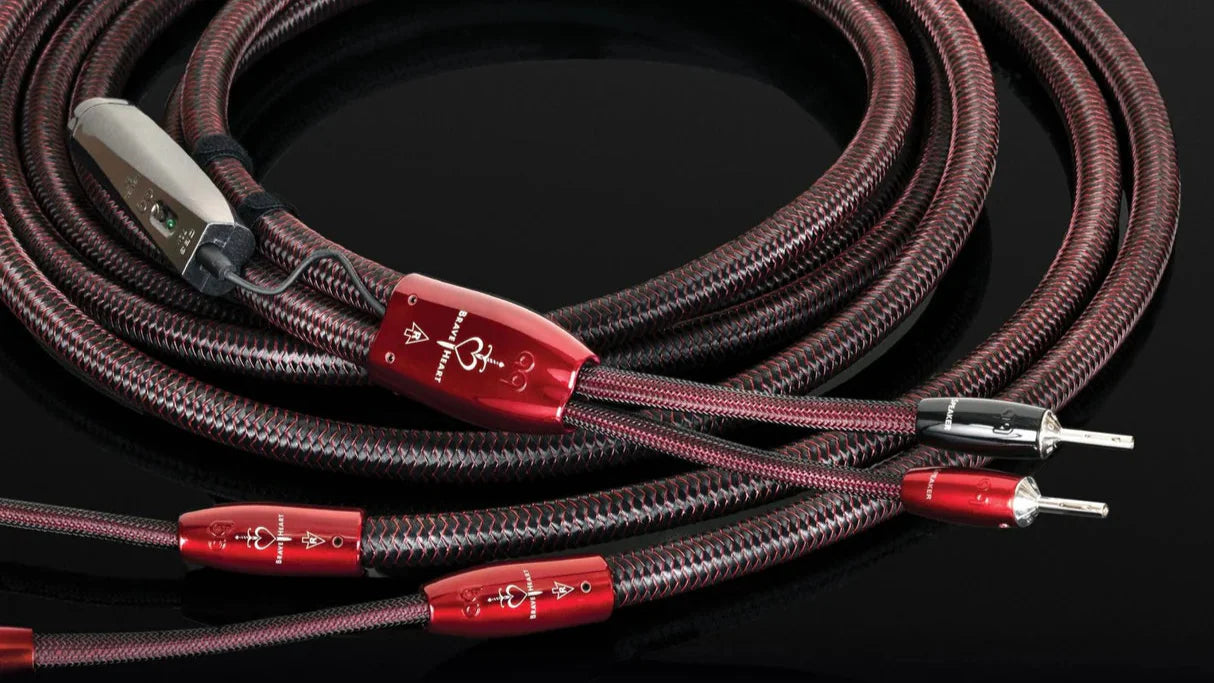
- AudioQuest Rocket 88 BiWire A capable speaker cable that lets the M-80 deliver its power cleanly to bi wire capable loudspeakers.
Frequently Asked Questions
What is the Onkyo Icon M-80?
It is the dedicated stereo power amplifier in Onkyo's premium Icon separates line, designed to take a signal from a preamplifier and drive your loudspeakers.
Does the M-80 need a preamplifier?
Yes. A power amplifier has no volume control or source switching, so it must be paired with a preamplifier such as the Onkyo Icon P-80.
What is the ideal partner for the M-80?
The Onkyo Icon P-80 network preamplifier is the natural match, providing source selection, streaming, and digital to analog conversion for a complete Icon stack.
How many channels does the M-80 have?
It is a two channel stereo power amplifier, driving a single pair of loudspeakers.
Does the M-80 have balanced inputs?
It provides balanced XLR and unbalanced RCA line inputs so it can integrate with a range of preamplifiers.
Does the M-80 stream music or have a DAC?
No. Streaming and digital to analog conversion are handled by a network preamplifier like the Icon P-80. The M-80 is a pure power amplifier.
Can the M-80 drive floorstanding speakers?
Yes. It is built to supply stable current to a wide range of bookshelf and floorstanding loudspeakers.
What speakers do you recommend with the M-80?
Options such as the MoFi SourcePoint 8, Spendor A1.2, and Mission 700 all pair well with the clean power the M-80 provides.
Why choose separate components instead of an integrated amplifier?
Separating the preamplifier and power amplifier keeps sensitive small signal stages isolated from the high current output stage, which can benefit clarity and system flexibility.
Is Onkyo a high fidelity brand?
Yes. Onkyo is a Japanese hi-fi maker founded in 1946, now under Premium Audio Company, with a renewed high fidelity range that includes the Icon series.
How does the M-80 connect to speakers?
It uses speaker binding posts that accept high quality cables such as the AudioQuest Rocket 88, including bi wire configurations.
Can I use the M-80 with a non Onkyo preamplifier?
Yes. Because it accepts standard balanced and unbalanced line inputs, it works with many preamplifiers, though the Icon P-80 offers the most cohesive match.
Is the M-80 part of a modular system?
Yes. The Icon line is a modular high fidelity system, so the M-80 is designed to stack with other Icon components.
Does the M-80 have a headphone output?
No. As a power amplifier its role is driving loudspeakers, so headphone listening is handled elsewhere in the system.
What kind of listener is the M-80 for?
It suits someone building a component system who wants a clean, dynamically capable stereo power stage as the foundation.
Can I bi wire my speakers with the M-80?
If your speakers support bi wiring, a bi wire cable such as the AudioQuest Rocket 88 BiWire lets you take advantage of that connection.
How does the M-80 differ from a power amplifier from another brand?
Different brands voice their amplifiers with their own character and design goals. The M-80 is distinguished by its role within the matched Onkyo Icon system.
Will the M-80 fit in a standard rack?
It follows the Icon design language and full size chassis format, so it is designed for placement in a typical component rack or shelf.
Is the M-80 covered by a warranty?
Yes. It carries Onkyo USA coverage for the original owner when purchased from an authorized dealer like All Elite Audio.
Why buy from All Elite Audio?
We are an authorized Onkyo dealer in Maryland, so you receive a genuine product with full manufacturer support, expert system matching advice, and knowledgeable service before and after your purchase.


Outlet Deals
-
Parasound HALO A21+ (USED)
Power Amplifier (USED)Regular price $4,000.00Regular priceUnit price per$5,000.00Sale price $4,000.00SALE -
Advance Paris A12 Classic
Integrated Amplifier (USED)Regular price $3,600.00Regular priceUnit price per$4,500.00Sale price $3,600.00SALE -
 SALE
Hegel H190v
Integrated Amplifier (USED)Regular price $2,995.00Regular priceUnit price per$4,600.00Sale price $2,995.00SALE -
 SALE
HiFi Rose RS520
Streaming Integrated Amplifier (USED)Regular price $2,495.00Regular priceUnit price per$3,995.00Sale price $2,495.00SALE -
Advance Paris A10 Classic
Integrated Amplifier (USED)Regular price $2,400.00Regular priceUnit price per$3,000.00Sale price $2,400.00SALE -
 SALE
Yamaha RX-A6A
Home Theater Receiver (USED)Regular price $1,995.00Regular priceUnit price per$2,700.00Sale price $1,995.00SALE


New Releases
-
KLH Model Four
Floorstanding SpeakersRegular price $1,999.98Regular priceUnit price per$1,999.98Sale price $1,999.98 -
Dual CS 718Q
TurntableRegular price $3,500.00Regular priceUnit price per$3,500.00Sale price $3,500.00 -
EverSolo DMP-A8 Gen 2
Music Streamer, DAC & PreamplifierRegular price $1,980.00Regular priceUnit price per$1,980.00Sale price $1,980.00 -
EverSolo DMP-A8 Gen 2 Master Edition
Music Streamer, CD Player, DAC & PreamplifierRegular price $2,580.00Regular priceUnit price per$2,580.00Sale price $2,580.00 -
EverSolo T10
Streaming TransportRegular price $2,180.00Regular priceUnit price per$2,180.00Sale price $2,180.00 -
 SALE
KLH Model Seven
Floorstanding SpeakersRegular price $4,999.98Regular priceUnit price per$5,998.00Sale price $4,999.98SALE