Matrix Audio
Couldn't load pickup availability
Have a trade-in item? Click here.
Specs
| Type | Digital audio transport (no internal DAC) |
| Streaming Services | AirPlay 2, DLNA/UPnP, TIDAL Connect, Qobuz Connect, Spotify Connect, vTuner, Radio Paradise, QQMusic |
| Roon | Roon Ready |
| Control | Matrix Audio MA app |
| Supported Formats | PCM and DSD, high-rate digital |
| Network | LAN 10/100/1000 Mbps; Wi-Fi 2.4 GHz / 5 GHz |
| Digital Outputs | USB, coaxial, optical, AES/EBU, and I2S (IIS-LVDS via HDMI) |
| Clock | High-precision internal clock |
| Digital Output - Coaxial, Optical & AES/EBU | PCM 16-24Bit /44.1kHz, 48kHz, 88.2kHz, 96kHz, 176.4kHz, 192kHz; DSD 2.8MHz (DoP) |
| Digital Output - IIS LVDS | PCM 16-32Bit /44.1kHz, 48kHz, 88.2kHz, 96kHz, 176.4kHz, 192kHz, 352.8kHz, 384kHz, 705.6kHz, 768kHz; DSD 2.82MHz, 3.07MHz, 5.64MHz, 6.14MHz, 11.29MHz, 12.29MHz, 22.58MHz, 24.58MHz |
| Digital Output - USB DAC | Depends on the specifications supported by the connected USB DAC device. Not higher than PCM 32Bit/768kHz and DSD 24.58MHz. The USB DAC port provides a maximum of 5V/1A low-noise power supply. |
| USB Ports | USB 3.0 x 2 (the USB port provides a maximum power of 5V/1A) |
| Trigger | Trigger in DC 6-12V<10mA |
| Storage Extension | M.2 2280 2260 2242 NVMe PCIe SSD slot x1 (slot provides DC 3.3V/3A maximum) |
| Roon Ready | PCM 16-24 Bit /44.1 kHz, 48kHz, 88.2kHz, 96kHz, 176.4kHz, 192kHz, 352.8kHz, 384kHz, 705.6kHz, 768kHz; DSD 2.82MHz, 5.64MHz, 11.29MHz, 22.58MHz |
| Local Playback (MA Player) | MP3, WMA, WAV, AIF, AIFC, AIFF, AAC, FLAC, OGG, APE, ALAC, M4A, DSF, DFF, CUE, ISO; PCM 16-24Bit/44.1kHz to 768kHz; DSD 2.82MHz to 24.58MHz |
| Controller App | MA Remote App |
| Power - AC Input | Wide voltage switching power supply; Power Consumption < 35W |
| Power - DC Input | External power voltage DC 12V ±10%; external power wattage Larger than 35W; power plug outer diameter 5.5mm, inner diameter 2.1mm (+ for inner, - for outer) |
| Dimensions (W x H x D) | 280 x 82 x 210 mm (11.02 x 3.23 x 8.27 in) |
| Weight | 2.76kg (6.08 pounds) |
Warranty
Sold as an authorized Matrix Audio dealer by All Elite Audio. New Matrix Audio TT-1 units include the full Matrix Audio manufacturer warranty of 1 year parts and labor for the original owner. Contact us with any setup or service questions.
What's in the Box
- Matrix Audio TT-1 Digital Audio Transport
- Power cable
- Quick start guide
Overview
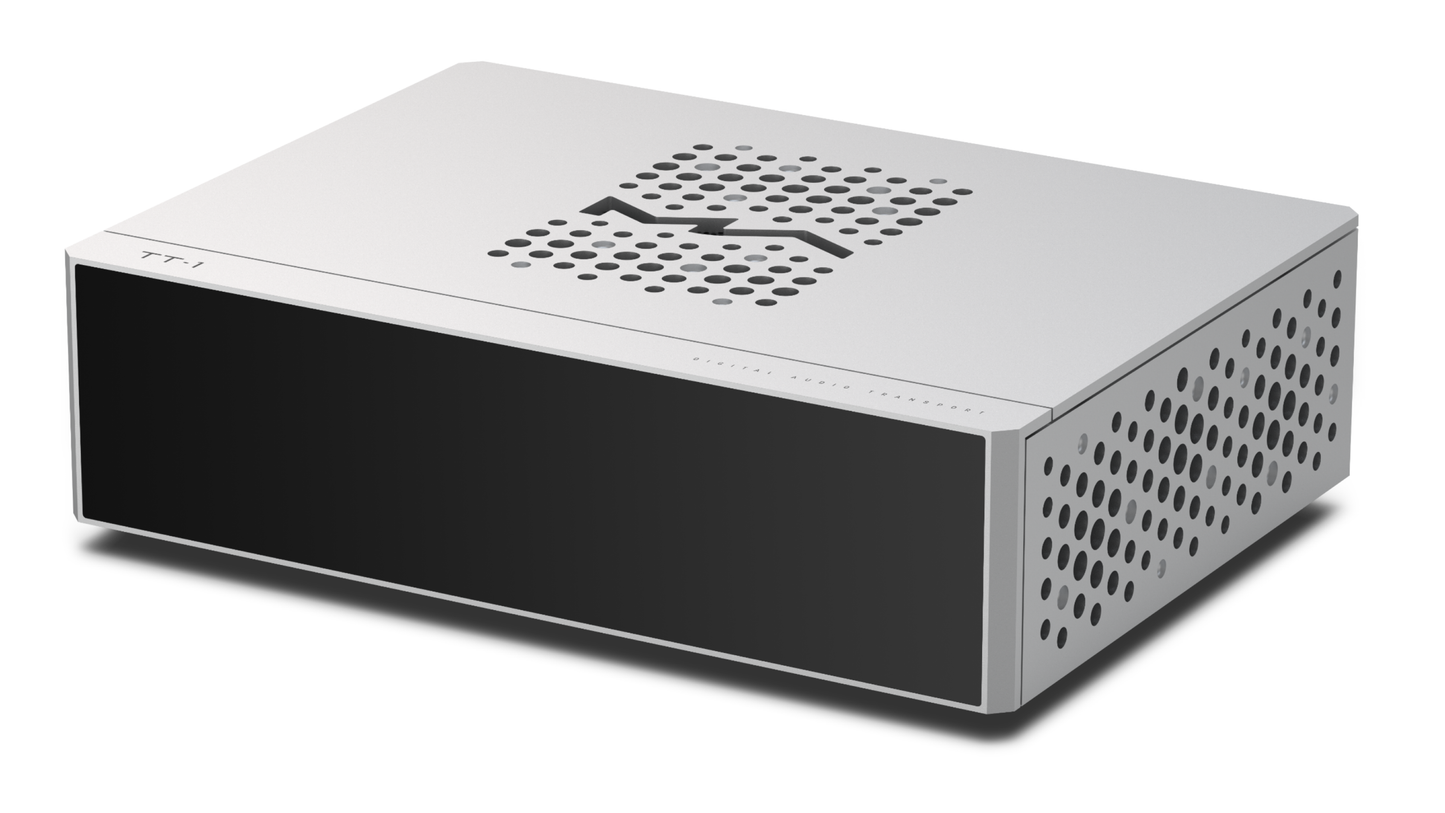
The Matrix Audio TT-1 is a dedicated digital audio transport built to do one job supremely well: pull music from your network and local sources and deliver it to an outboard DAC as clean, precisely clocked digital audio. Because it contains no digital to analog conversion or analog output stage, all of the engineering effort goes toward native streaming, jitter control and low-noise digital delivery.
As a Matrix Audio streaming component the TT-1 supports native network playback with Roon Ready, TIDAL, Qobuz, Spotify, DLNA and AirPlay, and it is controlled through the MA control app. It handles high-rate PCM and DSD and passes bit-perfect data over its digital outputs. A high-precision internal clock keeps timing tight, while the transport-only architecture keeps the DAC downstream free of the noise a combined unit would generate.
The TT-1 is for the listener who already owns a DAC they love, or who wants to build a system in separates for maximum flexibility and future upgrades. Pair it with a Matrix Audio DAC over USB or coaxial and you have a modern, app-driven front end that is easy to live with and built to grow.
Key Features
- Dedicated digital audio transport with no internal DAC, keeping conversion and noise in a separate box
- Native streaming with Roon Ready, TIDAL, Qobuz, Spotify, DLNA and AirPlay
- Controlled through the Matrix Audio MA control app for browsing, playlists and settings
- High-precision internal clock for tight timing and low jitter on the digital output
- Bit-perfect passthrough of high-rate PCM and DSD to your outboard DAC
- Wired Ethernet networking for stable, low-noise connection to your library and streaming services
- Support for local library playback over the network
- Compact, purpose-built chassis designed to integrate into a separates system
How the TT-1 Compares
Matrix Audio TT-1 vs Matrix Audio NT-1
The NT-1 sits higher in the Matrix Audio transport range and is aimed at listeners who want the most refined digital front end before their DAC. The TT-1 delivers the same core mission of clean, app-driven network transport in a more approachable package. Choose the NT-1 if you want the fuller expression of Matrix Audio's transport engineering and the TT-1 if you want that streaming-transport character in a streamlined form. See the Matrix Audio NT-1.
Matrix Audio TT-1 vs EverSolo T8 Streaming Transport
Both are pure transports that leave conversion to your chosen DAC. The EverSolo T8 leans on its own large-screen interface and ecosystem, while the TT-1 is built around the Matrix Audio MA app, Roon Ready operation and Matrix's clocking approach. Pick the one whose control experience and system philosophy fits how you like to browse and listen. See the EverSolo T8 Streaming Transport.
Matrix Audio TT-1 vs TEAC NT-507T Network Transport
The TEAC NT-507T is a network transport with TEAC's own design goals and layout, while the TT-1 reflects Matrix Audio's streaming and clocking character. Both feed an external DAC over digital, so the decision comes down to app experience, connectivity and how each fits your rack. Match the transport to the DAC and system you already run. See the TEAC NT-507T Network Transport.
Recommended DAC, Amplifier and Speakers
The TT-1 has no built-in DAC, so it needs an outboard converter to make sound. These Matrix Audio partners keep the system in one design language and let each stage do its job.
- Matrix Audio ND-1 DAC A dedicated DAC is exactly what the TT-1 is designed to feed. The ND-1 turns the transport's clean digital output into analog and completes the separates front end.
- Matrix Audio MS-1c Streamer and DAC If you want DAC duties and additional streaming in one box downstream of the TT-1, the MS-1c pairs naturally within the same Matrix Audio family.
- Matrix Audio MA-1 Class AB Power Amplifier The MA-1 provides Class AB power to drive your speakers once the DAC has converted the signal, keeping the whole chain Matrix Audio.
- MoFi SourcePoint 8 These bookshelf speakers reward a clean, detailed digital front end and pair well with a transport-plus-DAC system for a resolving, musical result.
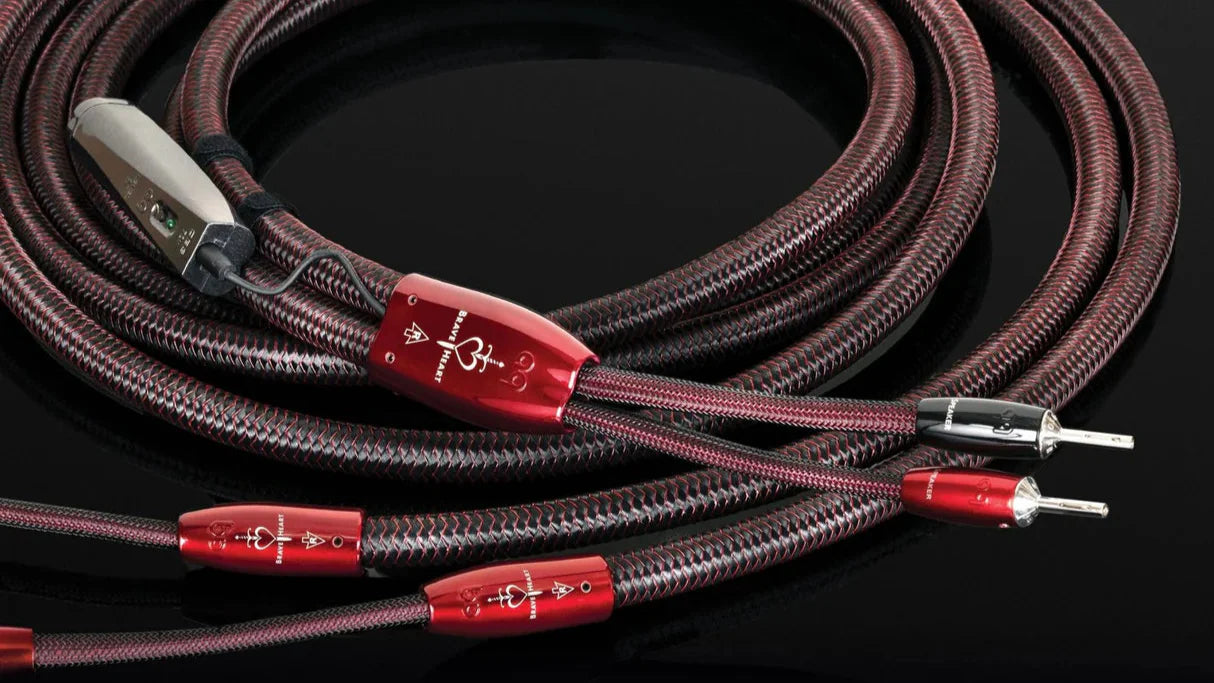
- Audioquest Rocket 88 BiWire Quality speaker cable preserves the resolution the TT-1 chain works to deliver from source to speaker.
Frequently Asked Questions
Does the Matrix Audio TT-1 have a built-in DAC?
No. The TT-1 is a pure digital transport with a digital output only, so it needs an outboard DAC to produce sound.
What is a digital audio transport?
It is a component that retrieves music from your network and local sources and sends it as digital audio to a separate DAC, keeping conversion and noise out of the source box.
Is the TT-1 Roon Ready?
Yes, the TT-1 supports Roon Ready operation as part of Matrix Audio's native streaming.
Which streaming services does it support?
It supports native streaming with TIDAL, Qobuz, Spotify, DLNA and AirPlay.
How do I control the TT-1?
You control it through the Matrix Audio MA app for browsing, playlists and settings.
What outputs does the TT-1 have?
It provides digital outputs, including USB and coaxial, to connect to your DAC. It has no analog outputs.
Can it play DSD and high-rate PCM?
Yes, it passes high-rate PCM and DSD as bit-perfect digital data to a capable DAC.
Which DAC should I pair with the TT-1?
A Matrix Audio DAC such as the ND-1, or a streamer and DAC like the MS-1c, keeps the system consistent and complements the transport.
Does the TT-1 connect over Wi-Fi or Ethernet?
It uses a wired Ethernet connection for a stable, low-noise link to your library and streaming services.
Why choose a separate transport instead of an all-in-one streamer?
Separates let you keep digital conversion in its own box and upgrade the transport or DAC independently for a flexible, future-proof system.
How does the TT-1 compare to the NT-1?
The NT-1 sits higher in the range and offers a fuller expression of Matrix Audio's transport engineering, while the TT-1 delivers the same core streaming-transport character in a more streamlined package.
Can I use the TT-1 with a non Matrix Audio DAC?
Yes. Any DAC with a matching digital input can be connected, though a Matrix Audio DAC keeps the system in one design language.
Does the TT-1 support MQA?
Actual format handling depends on the connected DAC. Please confirm current firmware support with us before purchase.
Does the TT-1 include a preamplifier or volume control?
It is a transport focused on delivering digital audio, so volume and analog duties are handled by your DAC or preamplifier downstream.
What clock does the TT-1 use?
It uses a high-precision internal clock to keep timing tight and reduce jitter at the digital output.
Will the TT-1 play my local music files?
Yes, it supports local library playback over the network in addition to streaming services.
What amplifier works well in a TT-1 system?
After a DAC, the Matrix Audio MA-1 Class AB power amplifier is a natural match to drive your speakers within the same family.
Is the TT-1 a good fit for a growing separates system?
Yes. Because it does one job well, it lets you build and upgrade the DAC, amplifier and speakers around it over time.
What comes in the box?
The TT-1 ships with the transport, a power cable and a quick start guide.
Why buy from All Elite Audio?
All Elite Audio is an authorized Matrix Audio dealer in MD with this model in stock, so you get a genuine unit, full manufacturer warranty support and expert help building the right transport, DAC and speaker system.


Outlet Deals
-
Parasound HALO A21+ (USED)
Power AmplifierRegular price $4,000.00Regular priceUnit price per$5,000.00Sale price $4,000.00SALE -
 SALE
SALEHiFi Rose RS520
Streaming Integrated AmplifierRegular price $2,995.00Regular priceUnit price per$3,995.00Sale price $2,995.00SALE -
 SALE
SALEYamaha RX-A6A
Home Theater ReceiverRegular price $1,995.00Regular priceUnit price per$2,700.00Sale price $1,995.00SALE -
NAD C 399 with MDC2 BluOS-D
Integrated AmplifierRegular price $1,795.00Regular priceUnit price per -
 SALE
SALEEversolo DMP-A8
Network Streamer, DAC and PreamplifierRegular price $1,495.00Regular priceUnit price per$1,980.00Sale price $1,495.00SALE -
 SALE
SALETEAC AX-505
Stereo Integrated AmplifierRegular price $1,395.00Regular priceUnit price per$2,000.00Sale price $1,395.00SALE


New Releases
-
KLH Model Four
Floorstanding SpeakersRegular price $1,999.98Regular priceUnit price per$1,999.98Sale price $1,999.98 -
Dual CS 718Q
TurntableRegular price $3,500.00Regular priceUnit price per$3,500.00Sale price $3,500.00 -
EverSolo T10
Streaming TransportRegular price $2,180.00Regular priceUnit price per$2,180.00Sale price $2,180.00 -
Luxman L-100 CENTENNIAL
Pure Class A Integrated AmplifierRegular price $11,995.00Regular priceUnit price per$11,995.00Sale price $11,995.00 -
EverSolo DMP-A8 Gen 2 Master Edition
Music Streamer, CD Player, DAC & PreamplifierRegular price $2,580.00Regular priceUnit price per$2,580.00Sale price $2,580.00 -
 SALE
SALEKLH Model Seven
Floorstanding SpeakersRegular price $4,999.98Regular priceUnit price per$5,998.00Sale price $4,999.98SALE