Accuphase
Have a trade-in item? Click here.
Specs
| Rated Output Power (8 ohms) | 100 watts per channel |
| Rated Output Power (4 ohms) | 150 watts per channel |
| Damping Factor | 600 |
| Frequency Response | 20 Hz to 20 kHz +0.0 / -0.2 dB (rated output), 3 Hz to 150 kHz +0.0 / -3.0 dB |
| Total Harmonic Distortion | 0.05 percent (8 ohms, 20 Hz to 20 kHz) |
| Input Sensitivity | 142 mV (High Level / Line, for rated output) |
| Gain | 28 dB (Main In to output), 18 dB (High Level / preamp stage) |
| Dimensions (W x H x D) | 465 x 161 x 420 mm (18.31 x 6.34 x 16.54 in) |
| Weight | 23.1 kg |
| Power Consumption | 69 W (idle), 185 W (per IEC 62368-1) |
Warranty
Sold as an authorized Accuphase dealer by All Elite Audio. New Accuphase E-3000 units include the full Accuphase USA manufacturer warranty of 3 years parts and labor for the original owner. Contact us with any service or setup questions.
What's in the Box
- Accuphase E-3000 integrated amplifier
- Remote control handset
- Power cord
- Owner's manual
- Warranty documentation
Overview
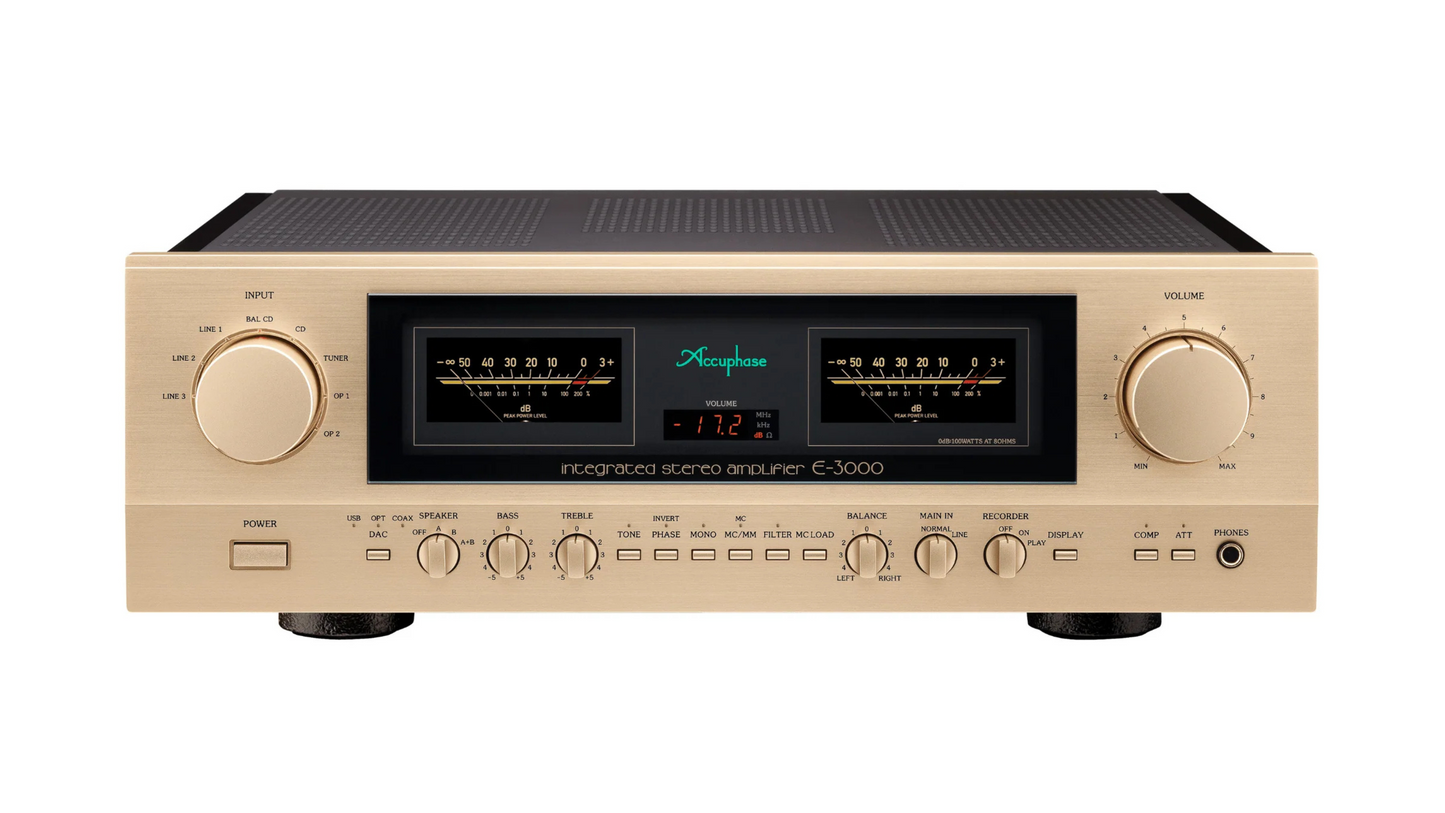
The Accuphase E-3000 is a stereo integrated amplifier that carries forward the company's decades of experience building precision audio components in Japan. It combines a powerful high current output stage with the refined signal handling that has come to define the brand, delivering effortless drive alongside exceptional inner detail. As an integrated design it consolidates a full preamplifier and a robust power amplifier into a single chassis, making it a complete heart for a serious two channel system.
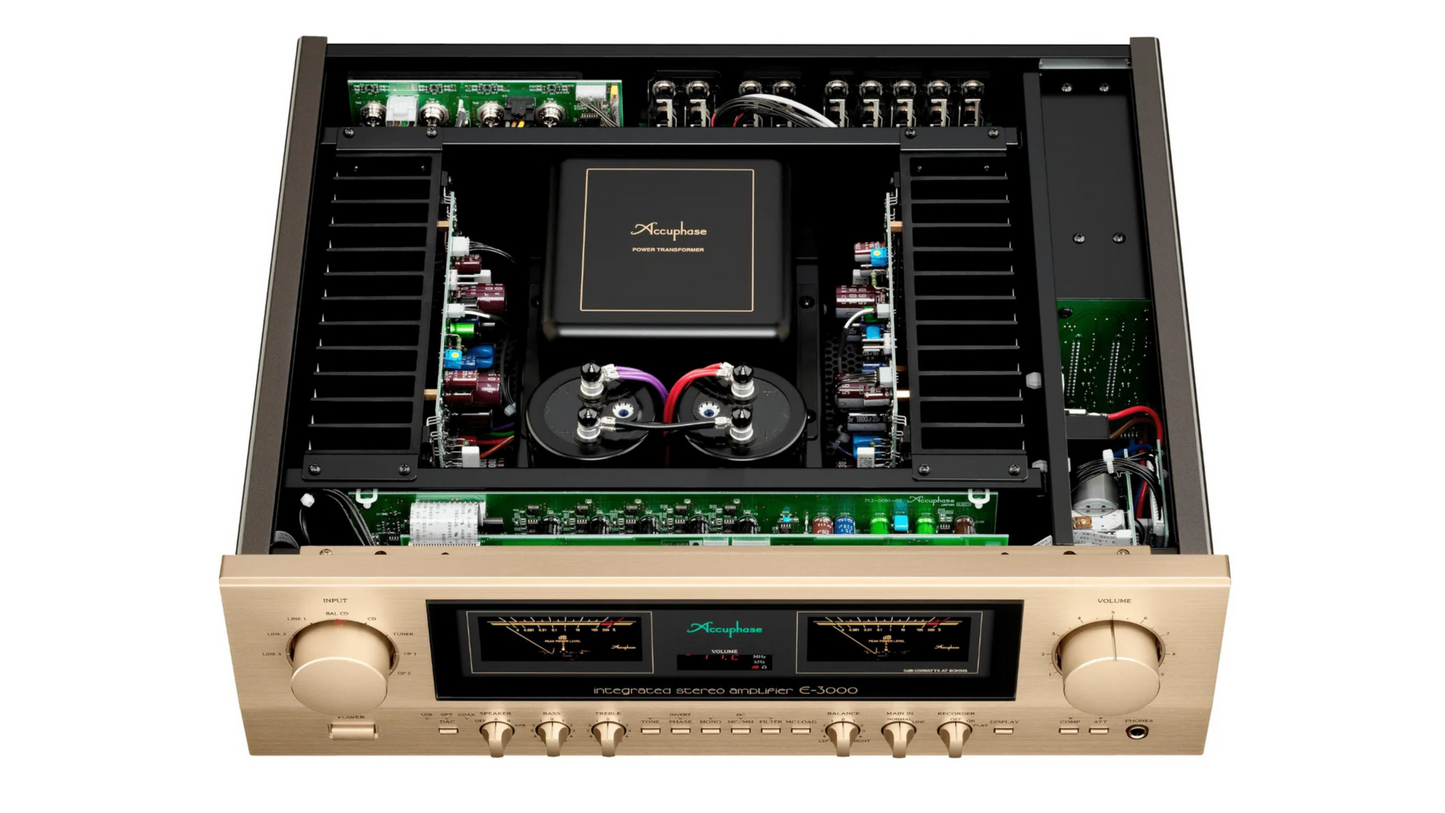
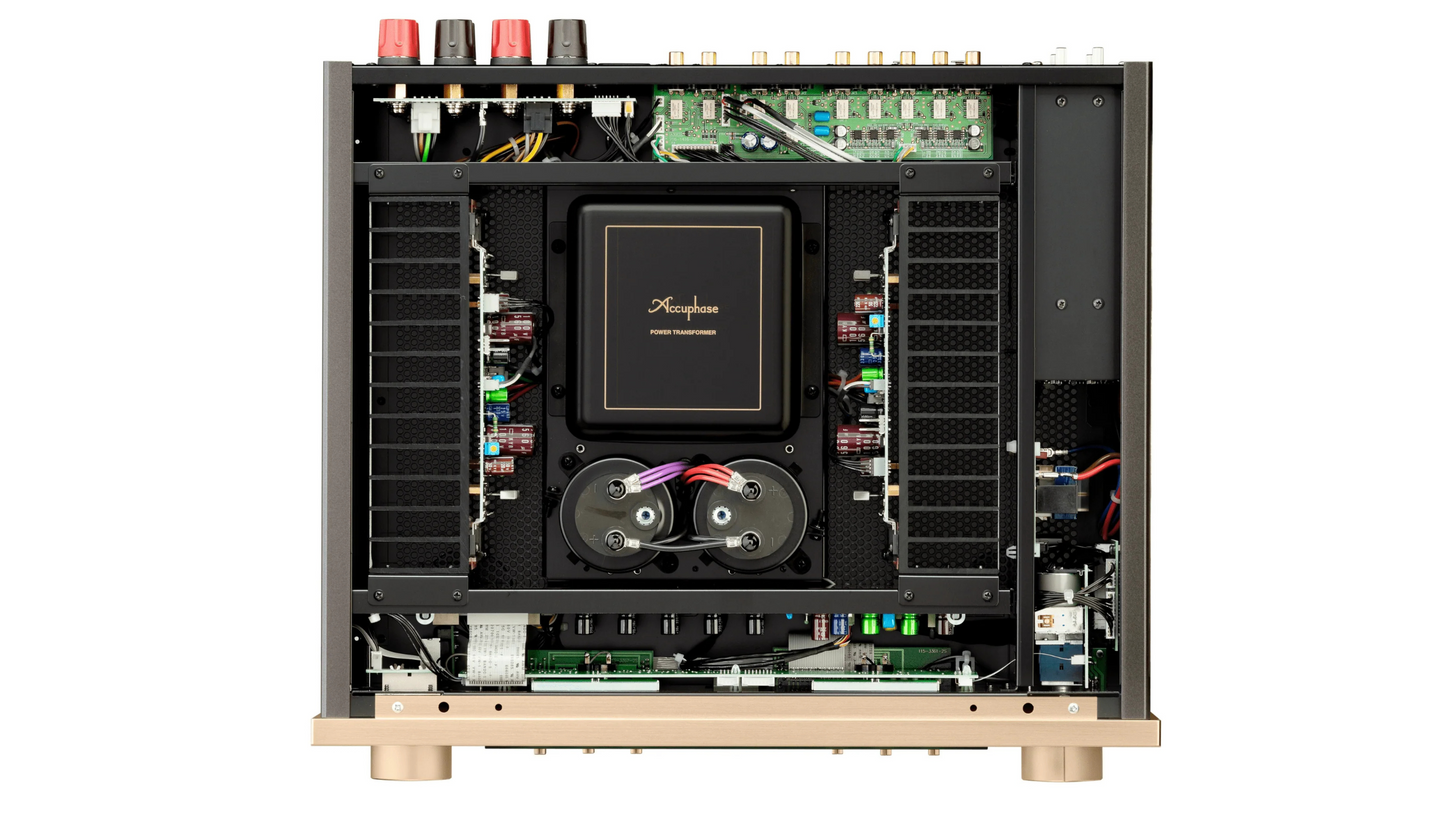
Engineering highlights include Accuphase's instrumentation style circuit topology, a large high efficiency power transformer, and generous filtering that supports stable delivery into demanding speaker loads. The output stage uses multiple parallel power devices to achieve a very high damping factor, giving the amplifier authoritative grip over the woofer and tight, well defined bass. The AAVA volume control, a hallmark of modern Accuphase electronics, adjusts level without conventional resistive attenuators in the signal path, preserving purity and signal to noise ratio at every listening position.
The E-3000 is intended for the listener who wants a single elegant component that can command a wide range of loudspeakers, from efficient horns to more demanding multi driver floorstanders. Its optional board slots allow it to grow with the system, accepting phono and digital input modules so it can serve as a long term centerpiece rather than a stopgap.
Key Features
- High current instrumentation style power stage with multiple parallel output devices for authoritative load control
- AAVA volume control adjusts level without resistors in the signal path, preserving purity at all settings
- Very high damping factor for tight, controlled bass and firm grip on the woofer
- Large high efficiency power transformer with substantial filter capacity for stable dynamic delivery
- Logic controlled relay signal switching keeps paths short and minimizes contact degradation
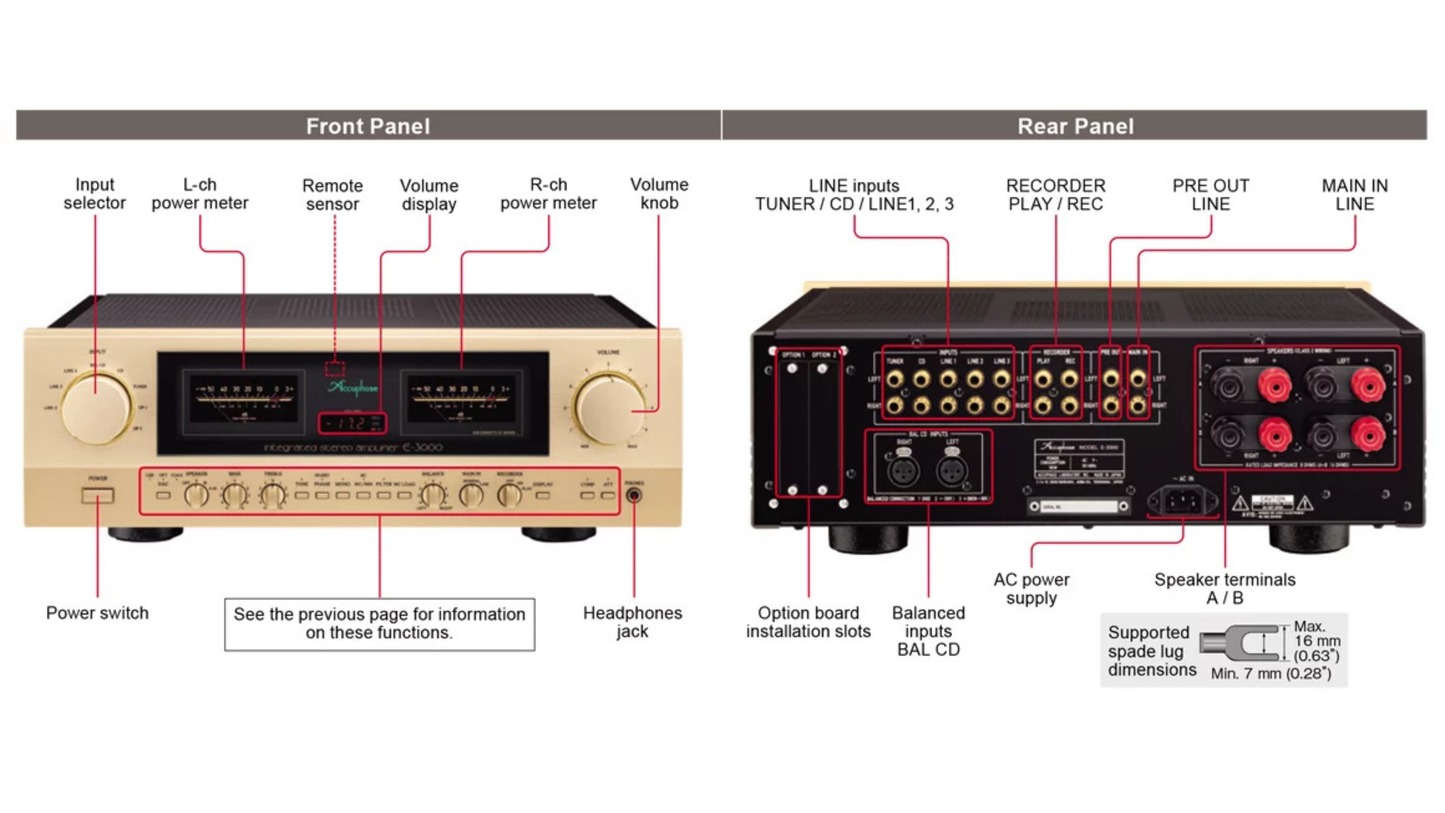
- Expansion slots accept optional analog phono and digital input boards for future flexibility
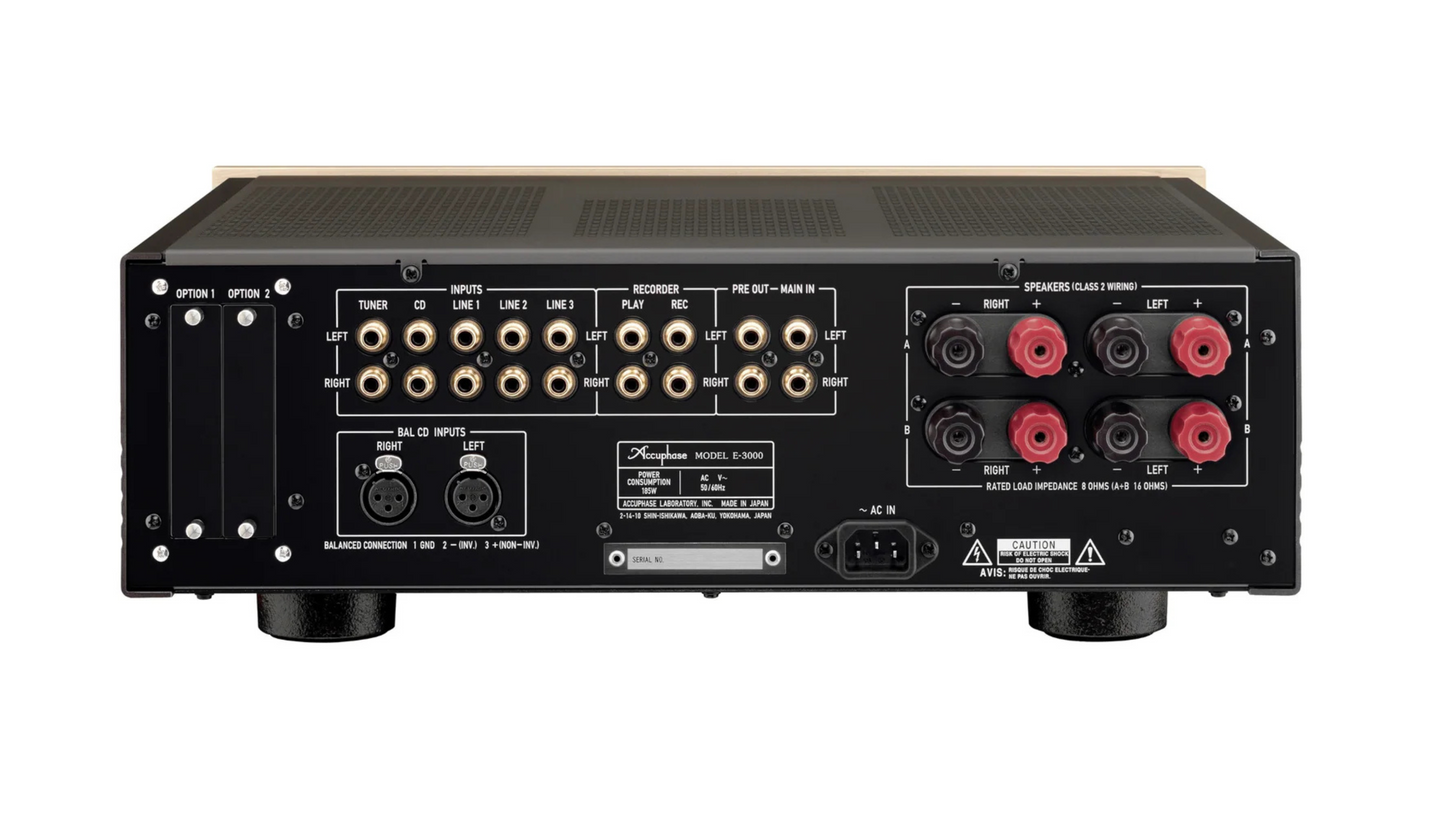
- Balanced and single ended inputs for flexible source connection
- Precision machined chassis and traditional Accuphase fit and finish for long service life
How the E-3000 Compares
Accuphase E-3000 vs Accuphase E-4000
The E-4000 sits one step above the E-3000 in the same Accuphase integrated range and legitimately offers more, with greater rated output power and additional reserves for the most demanding loads. If your room is large or your speakers are power hungry, the E-4000 provides extra headroom while sharing the same design philosophy. The E-3000 remains the ideal choice for listeners who want the Accuphase character in a more compact power envelope. See the Accuphase E-4000.
Accuphase E-3000 vs Luxman L-507Z
The Luxman L-507Z is another accomplished solid state integrated amplifier that leans toward a warm, fluid presentation with its own signature volume technology. The E-3000 emphasizes very high damping factor and instrumentation grade precision, giving it a firmly controlled and highly resolving character. Both are excellent, and the choice comes down to whether you prefer Luxman's rich musical flow or Accuphase's authoritative grip and clarity. See the Luxman L-507Z.
Accuphase E-3000 vs Yamaha A-S3200
The Yamaha A-S3200 is a flagship integrated with a striking mechanical aesthetic and a balanced, energetic voice. The E-3000 differentiates itself through Accuphase's AAVA volume control and expandable board architecture, suiting a listener who values long term flexibility and refined resolution. Either can anchor a high end system, with the decision guided by tonal preference and desired feature set. See the Yamaha A-S3200.
Recommended Speakers
The E-3000 has the current to command demanding loads and the finesse to reward efficient designs, so it partners well across a wide range of speakers and rooms. These pairings all benefit from its control and resolving power.
- Marten Parker Trio Diamond The diamond tweeter and refined driver complement resolve every bit of the E-3000's inner detail, while the amplifier's high damping factor keeps the multi driver bass tight in medium to large rooms.
- Gauder Akustik Arcona 100 MKII SD Gauder's steep slope crossovers and precise imaging reward the clean, controlled drive of the E-3000, delivering sharp transients and a stable soundstage in mid sized spaces.
- Klipsch La Scala AL6 These high efficiency horns show off the amplifier's low noise and finesse at modest power, letting the AAVA volume control preserve purity while the horns provide effortless dynamics.
- Spendor Classic 200Ti The large three way Spendor benefits from the E-3000's grip and reserves, pairing the amplifier's authority with the speaker's full range warmth for relaxed listening in larger rooms.
- Amphion Krypton 3X Amphion's controlled directivity and tight bass alignment align naturally with the E-3000's precise, well damped presentation, producing focused imaging and clean low end.
Frequently Asked Questions
What type of amplifier is the Accuphase E-3000?
It is a stereo integrated amplifier that combines a full preamplifier and a powerful solid state power amplifier in a single chassis.
How much power does the E-3000 deliver?
It is rated at 120 watts per channel into 8 ohms, 180 watts per channel into 4 ohms, and 240 watts per channel into 2 ohms.
Can the E-3000 drive demanding speaker loads?
Yes. Its high current output stage and rising power into lower impedances allow it to control demanding multi driver speakers with ease.
What is the AAVA volume control?
AAVA is Accuphase's volume system that adjusts level without conventional resistive attenuators in the signal path, preserving signal purity and signal to noise ratio at every position.
Does the E-3000 have a phono stage?
It accepts an optional analog phono board that installs into an expansion slot, so you can add moving magnet and moving coil support.
Can I add a digital input to the E-3000?
Yes. An optional digital input board can be installed into the amplifier's expansion slot to accept digital sources.
Does it have balanced inputs?
Yes, the E-3000 provides balanced inputs along with single ended line inputs for flexible source connection.
What is the damping factor of the E-3000?
It offers a very high damping factor of 1000, which contributes to tight, well controlled bass and firm command over the woofer.
How does the E-3000 compare to the E-4000?
The E-4000 is the next model up in the range and legitimately offers more output power and reserves, making it suited to larger rooms and more demanding speakers, while sharing the same design philosophy.
What speakers pair well with the E-3000?
It pairs well with resolving floorstanders and efficient designs alike, from Marten and Gauder Akustik to Klipsch Heritage horns and Spendor Classic models.
Is the E-3000 suitable for a large room?
Yes, its power and headroom handle medium to large rooms comfortably, though very large rooms with power hungry speakers may benefit from the E-4000.
How much does the E-3000 weigh?
It weighs approximately 24.4 kg, reflecting its substantial power transformer and rigid chassis construction.
What are the dimensions of the E-3000?
It measures approximately 465 x 181 x 429 mm (width x height x depth).
Does the E-3000 come with a remote control?
Yes, a remote control handset is included in the box.
Can I use the E-3000 as a preamplifier or power amplifier separately?
It offers pre out and main in connections on most Accuphase integrated designs, allowing flexible use with external components. Please confirm the exact configuration with us before purchase.
Is the E-3000 a Class A amplifier?
The E-3000 is a high power solid state design engineered for control and resolution. Contact us for detailed clarification of its operating class if that is a deciding factor for your system.
What warranty does the E-3000 include?
It includes a 3 year parts and labor warranty for the original owner when purchased from an authorized dealer.
Is All Elite Audio an authorized Accuphase dealer?
Yes, All Elite Audio is an authorized Accuphase dealer, so your purchase is backed by the full manufacturer warranty.
Can you help me match the E-3000 to my speakers?
Absolutely. We can advise on pairings based on your speakers, room size, and listening preferences to help you get the best result.
Why buy from All Elite Audio?
We are an authorized Accuphase dealer offering genuine products with full warranty coverage, expert system matching, and dedicated support before and after your purchase.