Accuphase
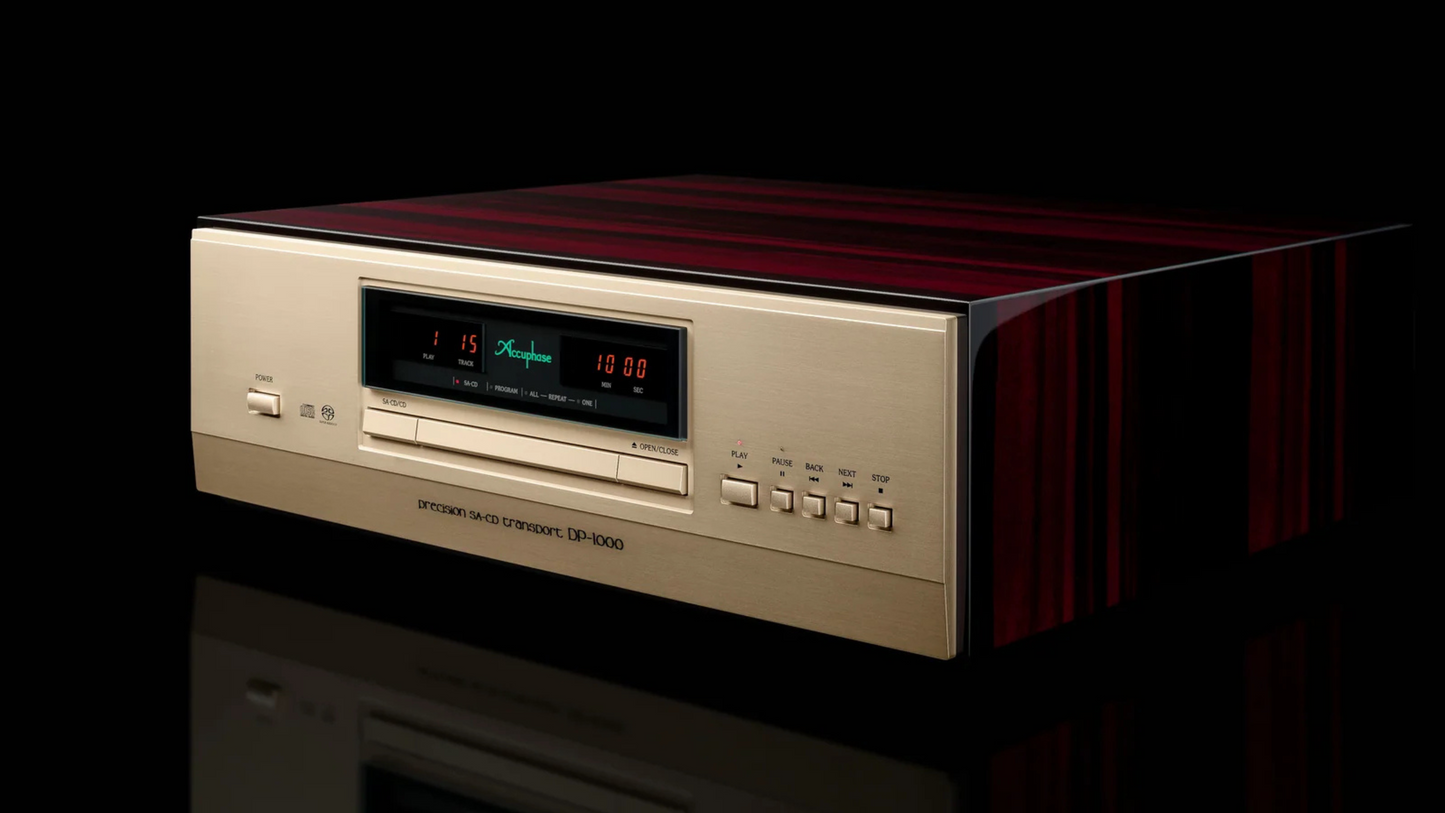
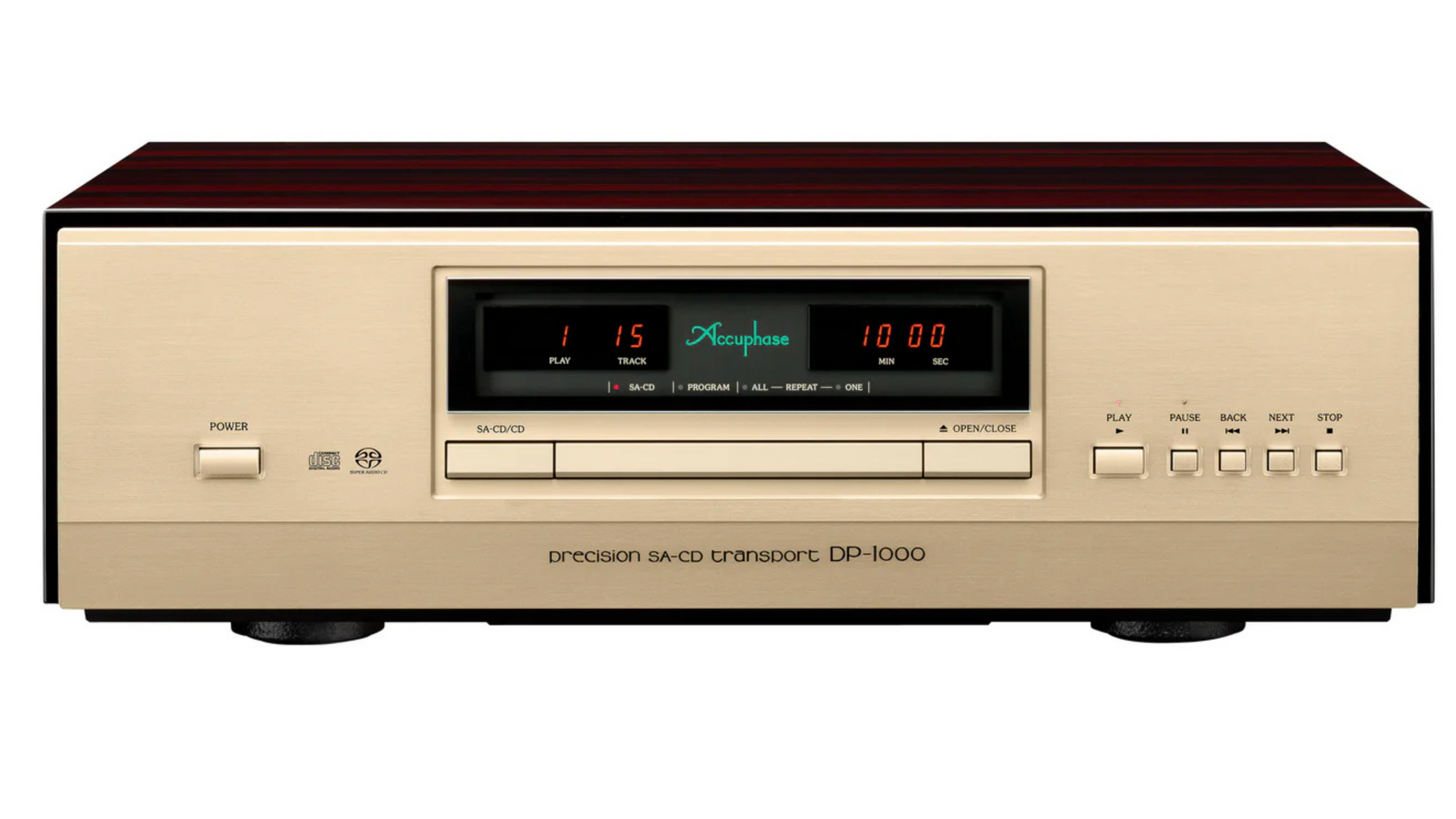
Accuphase DP-1000 Precision SA-CD Transport
Accuphase DP-1000 Precision SA-CD Transport
Accuphase DP-1000 Precision SA-CD Transport
Accuphase's reference SA-CD and CD transport — a dedicated disc-reading mechanism with no internal DAC, built around a 7.2 kg machined aluminum drive assembly, dual independent toroidal transformers, and HS-LINK proprietary digital output for lossless DSD and high-resolution PCM transfer to the companion DC-1000 processor.
What It Is — And What It Is Not
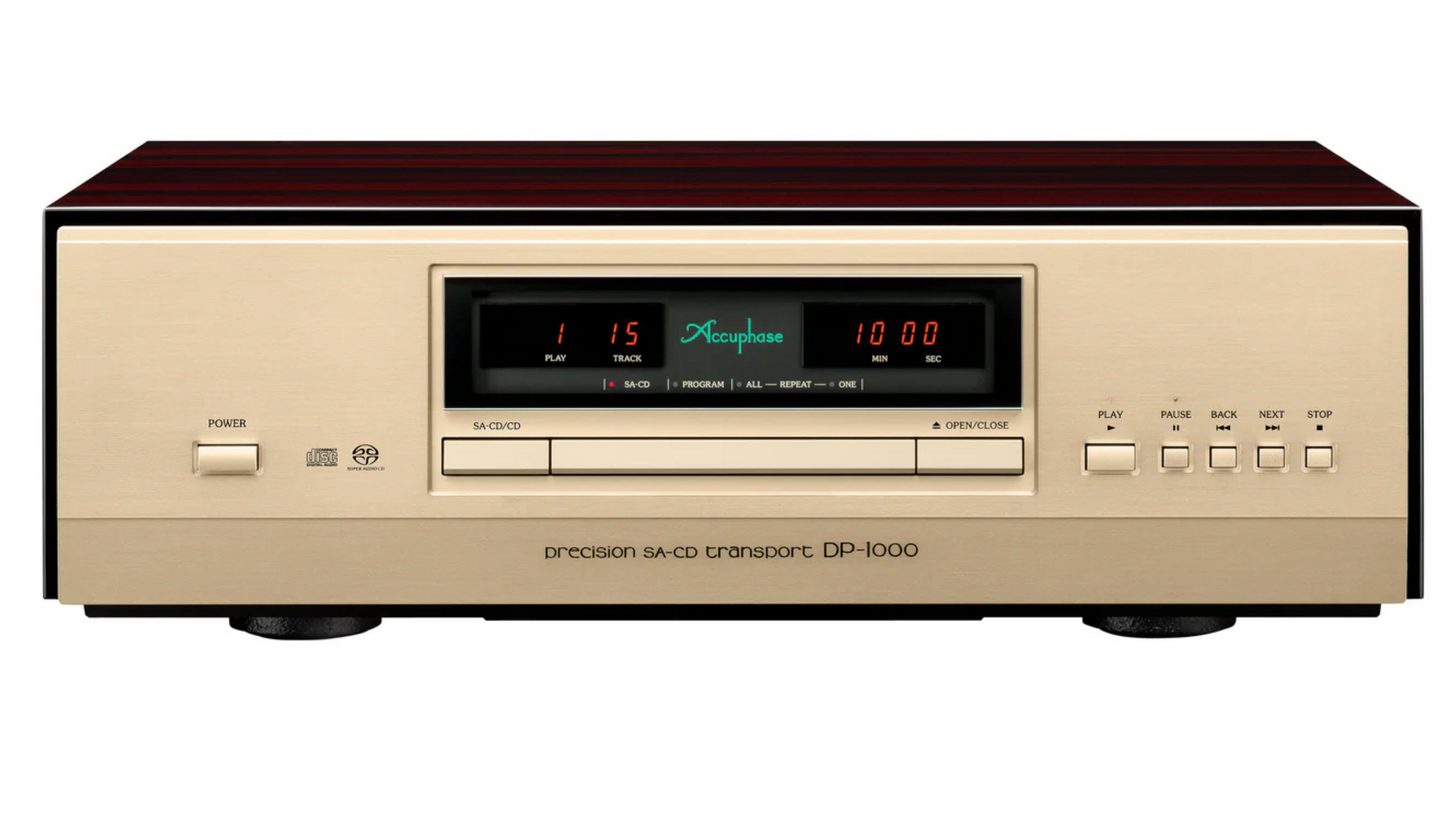
The Accuphase DP-1000 is a transport, not a player. It reads SA-CDs and CDs with exceptional mechanical precision and outputs the digital data to an external processor or DAC — it does not convert that data to an analog signal internally. There are no analog outputs. There is no built-in DAC. This distinction matters before anything else, because the buyer considering the DP-1000 needs to understand exactly what they are purchasing: the finest disc-reading mechanism Accuphase has ever built, designed to feed a companion processor and complete a two-chassis digital source system.
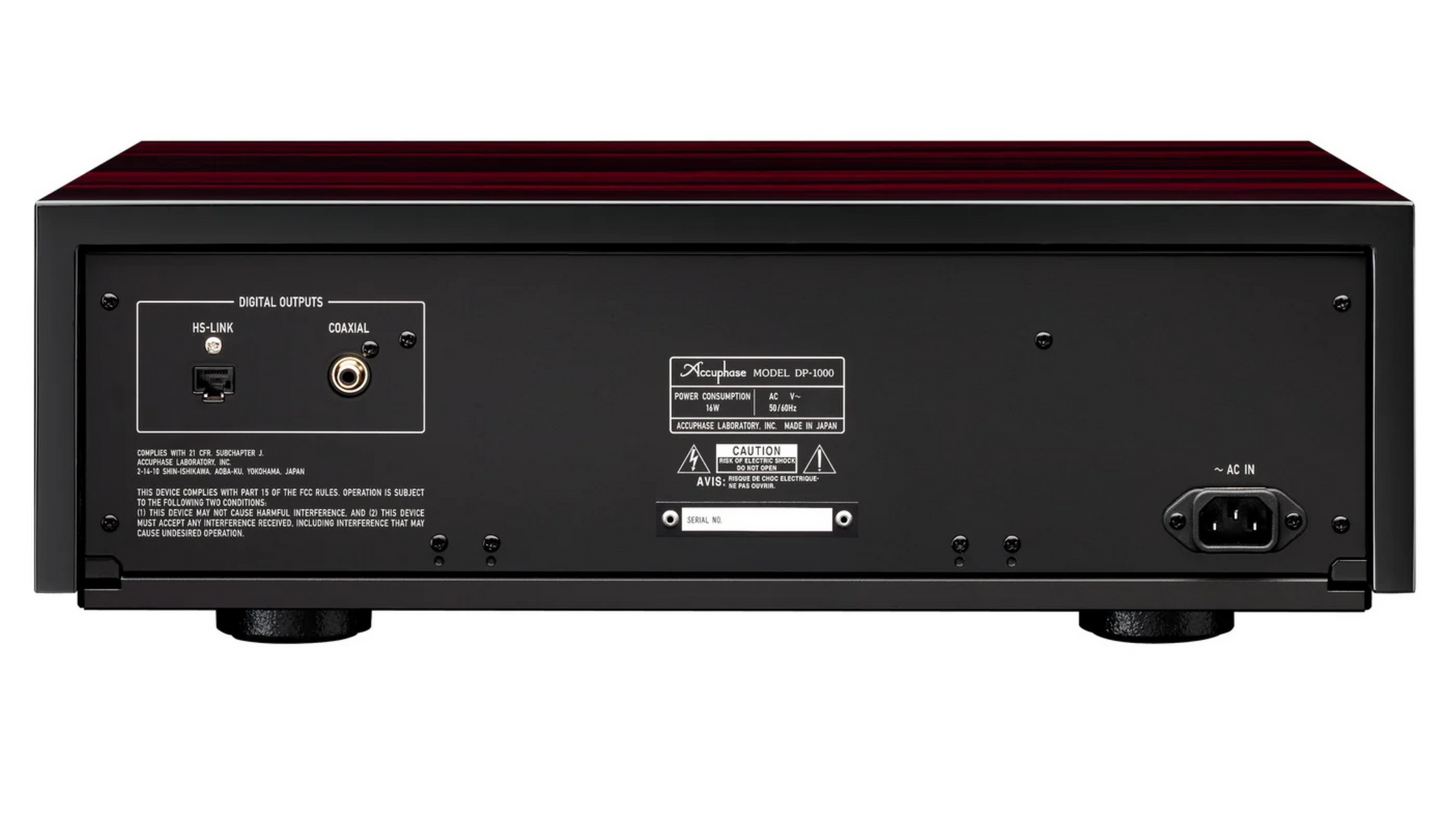
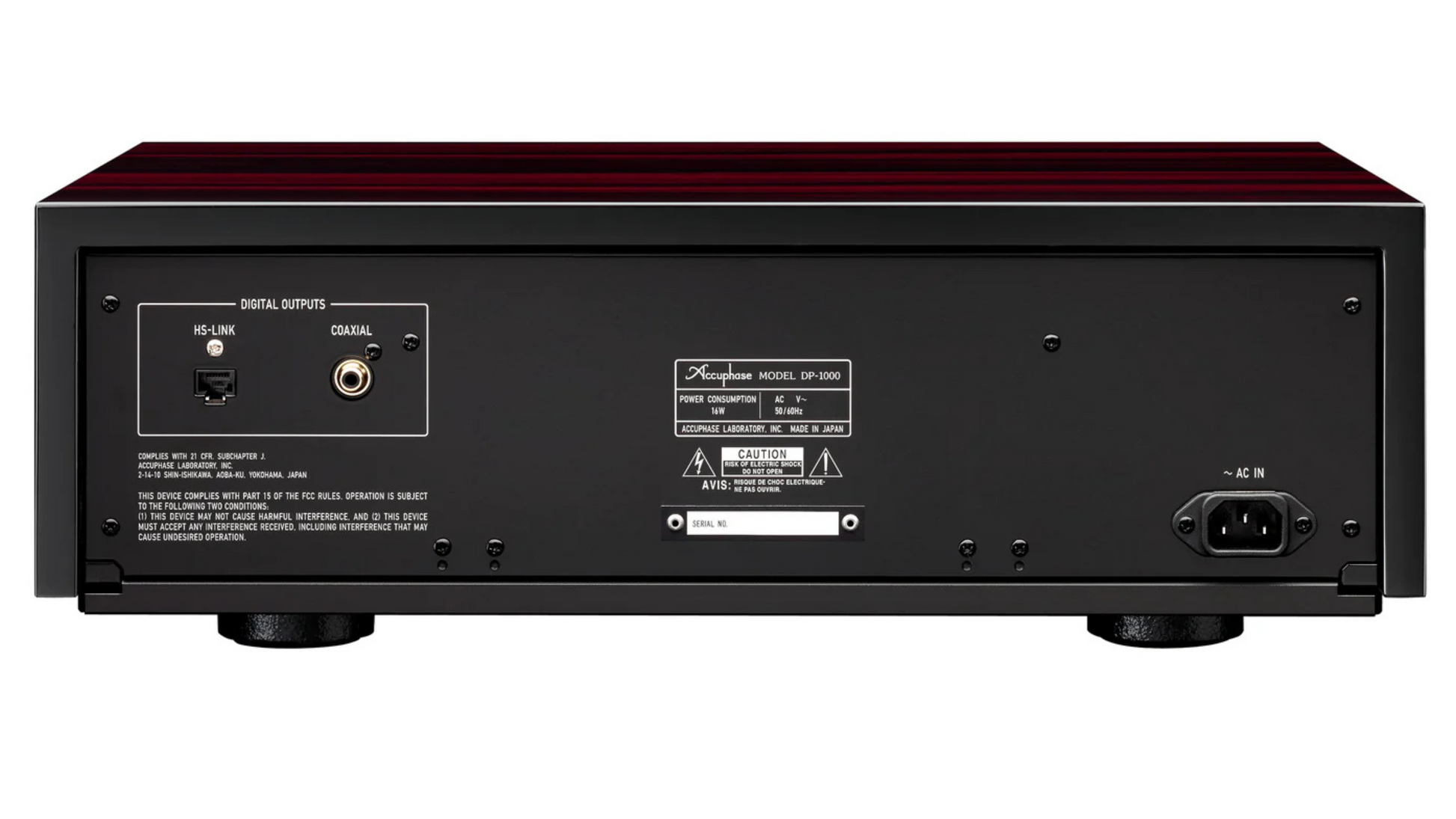
The natural companion is the Accuphase DC-1000 Precision MDSD Digital Processor, which receives the DP-1000's output via the HS-LINK proprietary interface and converts it using an eight-channel parallel DAC architecture. Together they constitute Accuphase's reference disc playback system, created to mark the company's 50th anniversary. The DP-1000 can also output standard coaxial S/PDIF for use with other DACs and processors — though the SA-CD layer cannot be transmitted over standard S/PDIF, only via HS-LINK.
The buyer who needs the DP-1000 has already made the decision that disc playback belongs in a reference system, and that the mechanical integrity of the transport is worth addressing as a separate engineering problem from the digital conversion. That decision is justified: the two functions impose contradictory requirements on a power supply, a chassis, and an internal layout, and solving both optimally in a single component always involves compromise. The DP-1000 solves one problem completely.
The Drive Assembly — 11 Kilograms of Controlled Mass
The DP-1000's fundamental engineering story is mass, rigidity, and controlled damping. Vibration is the enemy of accurate disc reading: a spinning disc in a chassis that resonates will produce data errors and timing jitter that no amount of downstream error correction fully eliminates. Accuphase's approach to this problem is architectural rather than electronic.
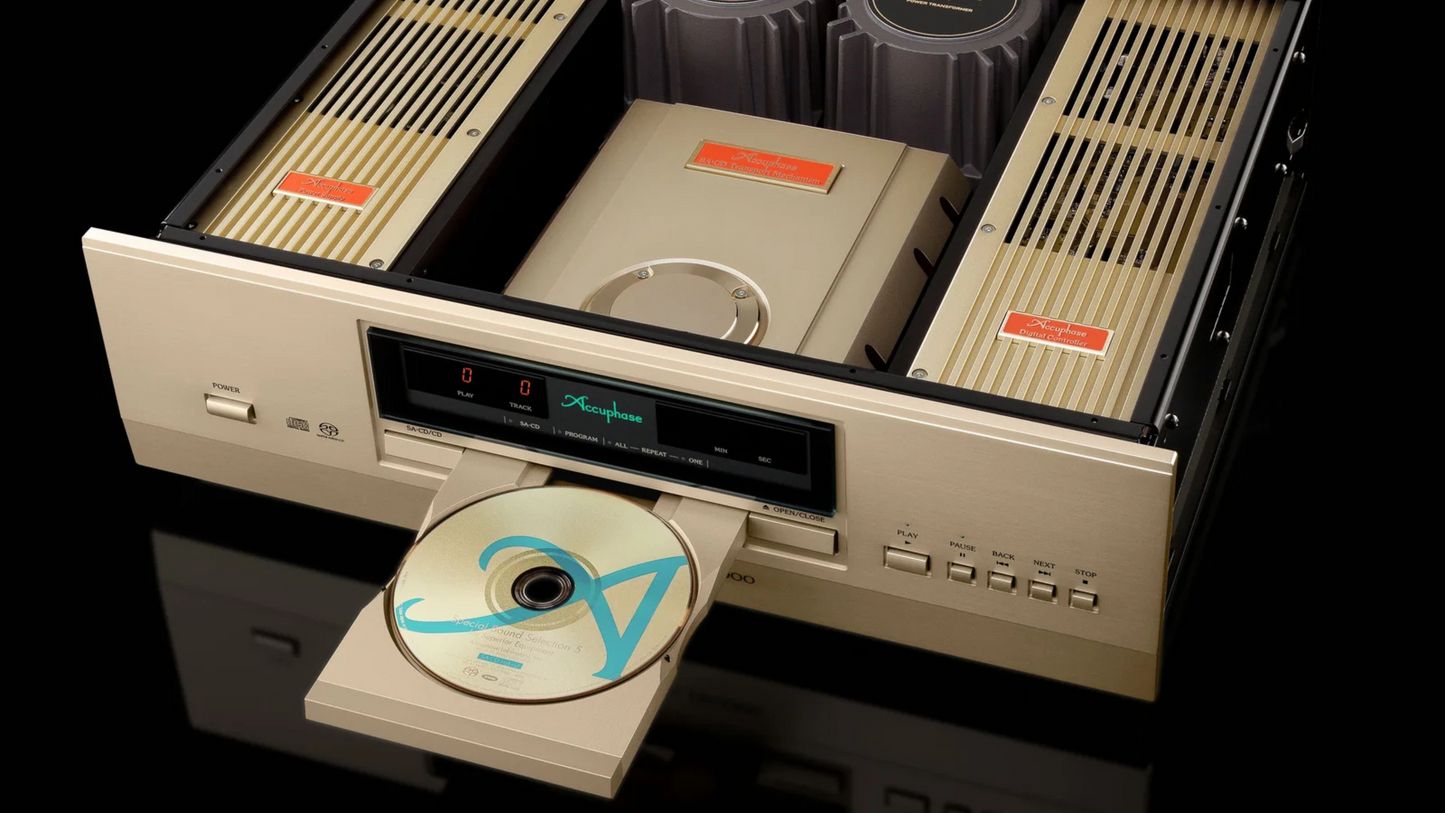
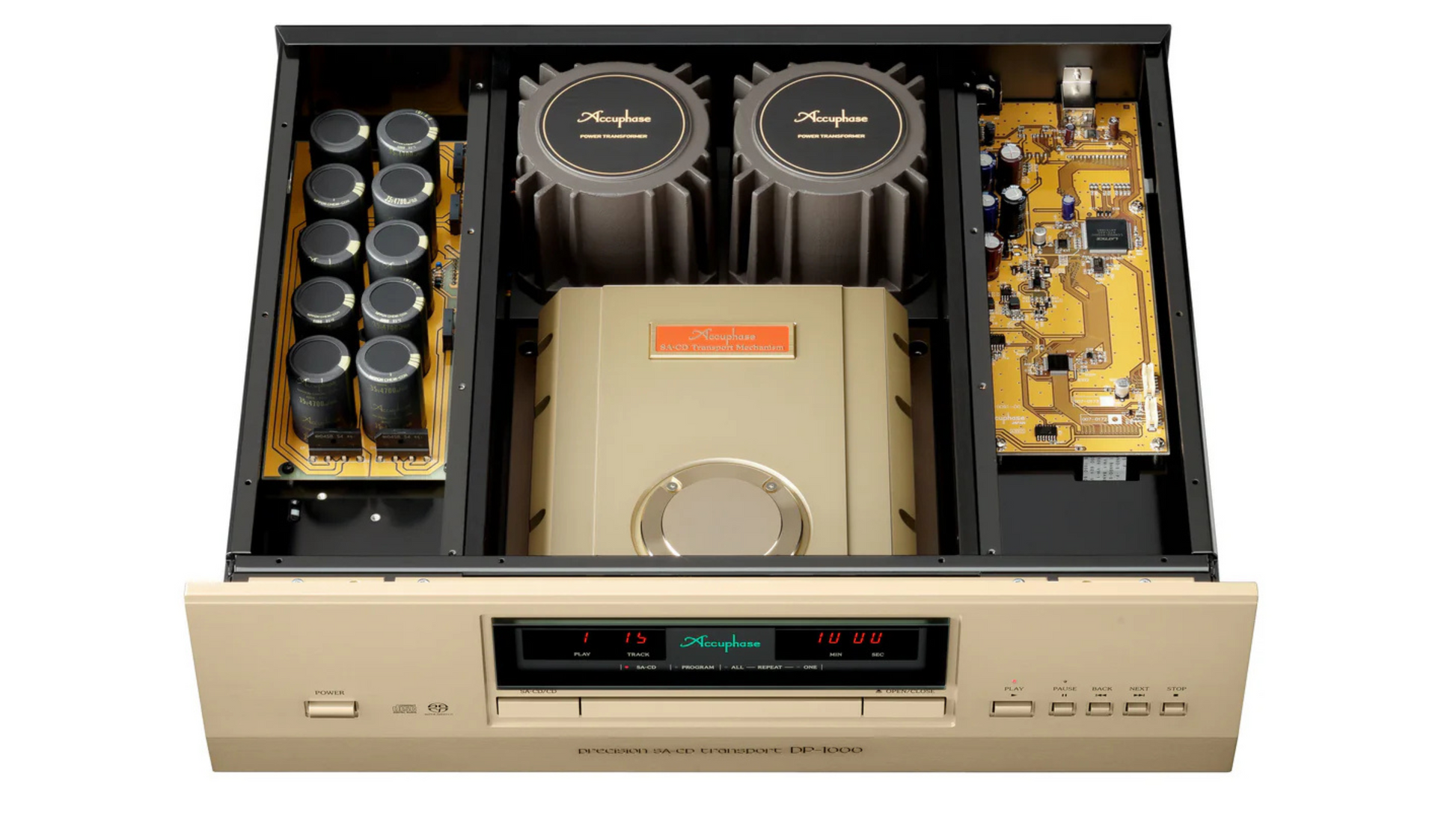
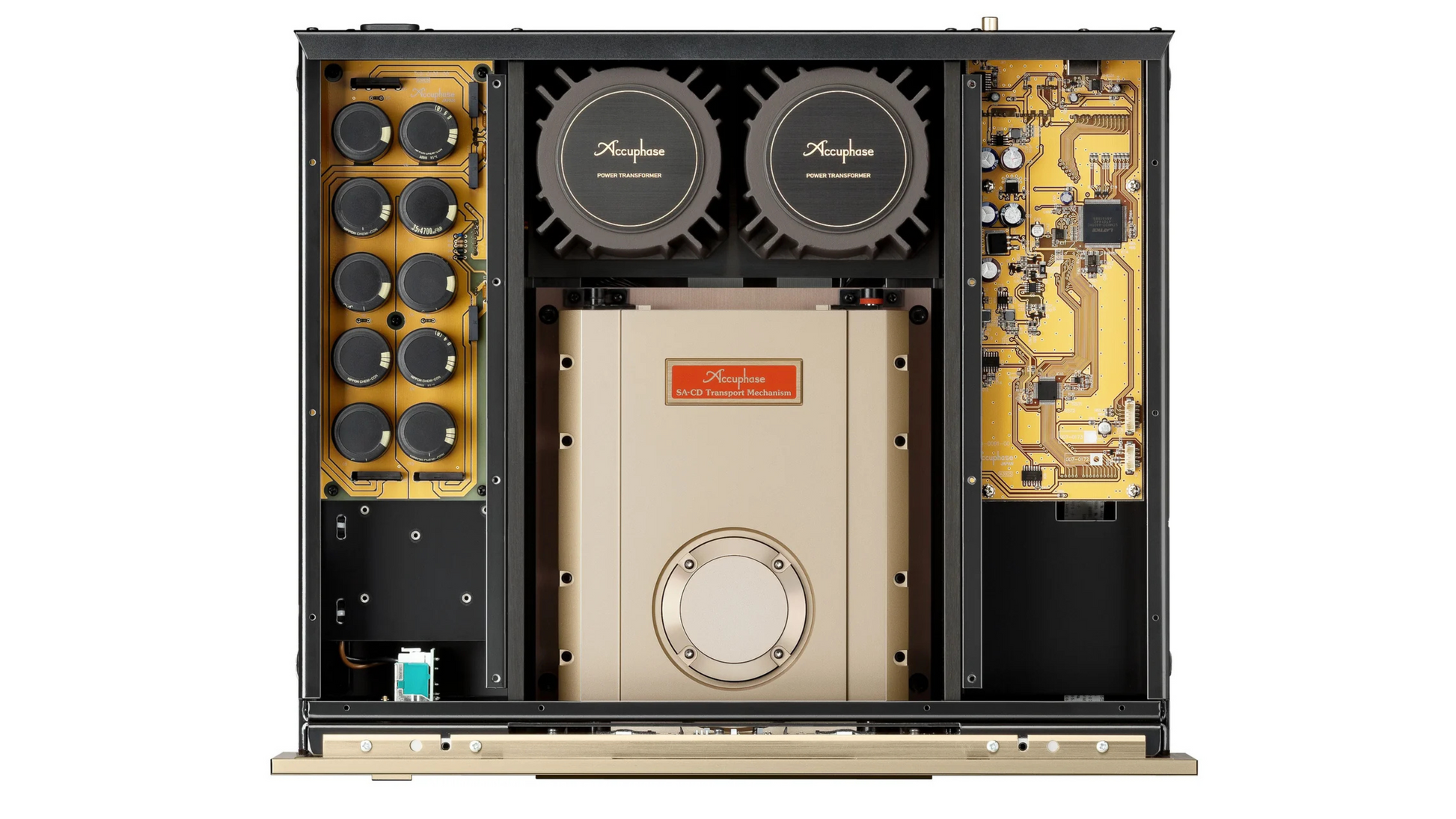
The SA-CD/CD drive assembly itself weighs 7.2 kg — heavier than many complete integrated amplifiers. It is mounted on a 3.8 kg machined aluminum bottom plate, 12 mm thick. The combined mass of 11 kg sits at the lowest possible point in the chassis, establishing a low center of gravity that resists the rocking and pitching movements that would otherwise transfer through the chassis to the pickup. The traverse mechanism — the assembly that moves the laser across the disc — is supported by elastic dampers of two different hardnesses. The dual-hardness damper system is deliberate: a single-hardness damper has a natural resonant frequency at which it amplifies rather than attenuates vibration. Using two different hardnesses staggers those resonant frequencies, so neither is excited by the rotational harmonics of the disc drive motor and neither amplifies vibration at the frequencies that matter most for data reading accuracy.
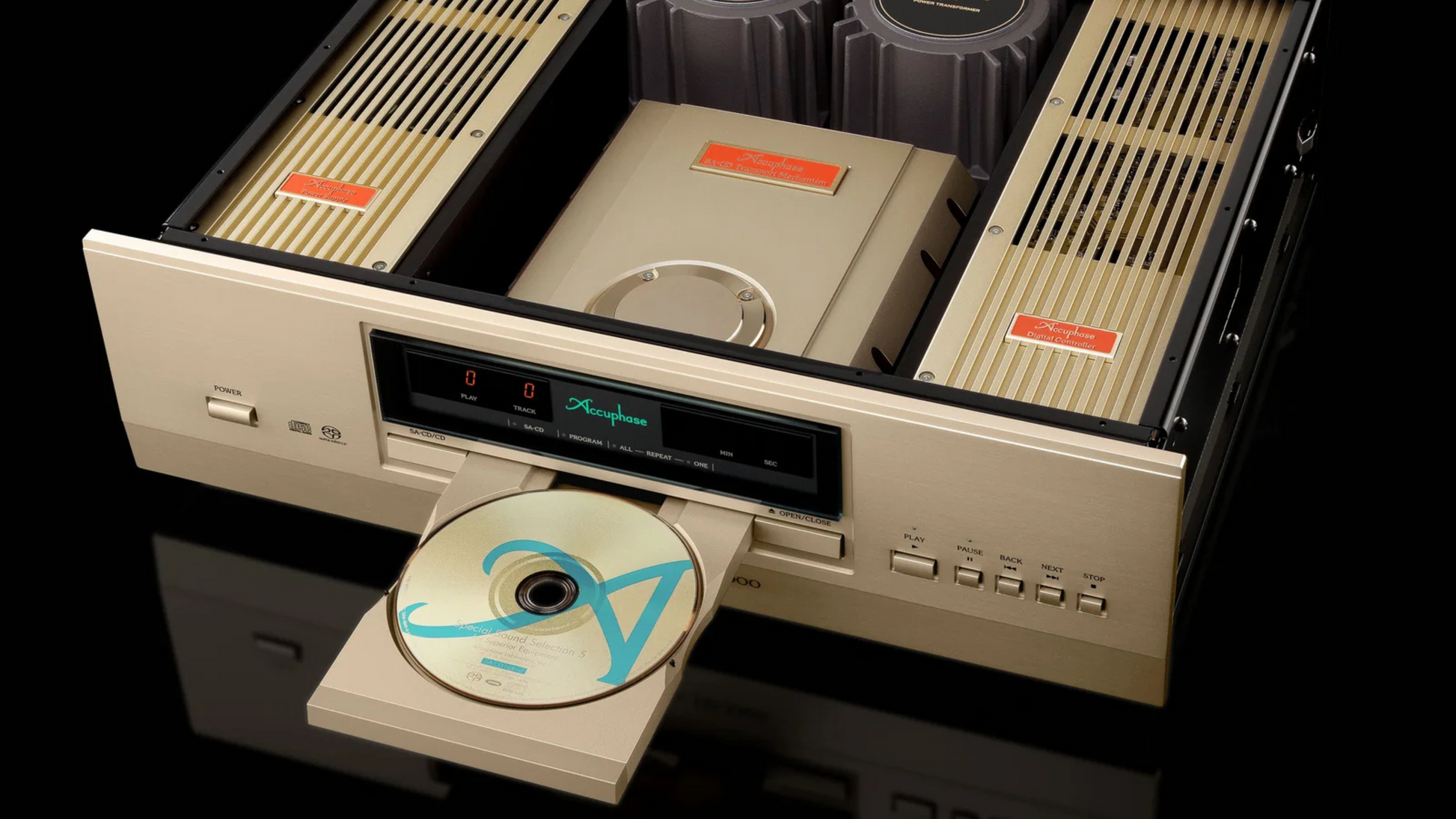
The majority of mechanical parts in the DP-1000 are machined from aluminum billet, not stamped or cast. Machining tolerances are in the micron range — millionths of a meter — which Accuphase describes as virtually eliminating dimensional errors in assembly. This precision is visible in the disc tray, which is carved from an aluminum block and given a hard anodized satin finish. It runs on dual stay bearing shafts that open and close with a silence and solidity that immediately communicates the build quality of the mechanism inside.
The Motor — No Contacts, No Vibration
The DP-1000 uses an outer rotor brushless DC motor to rotate the disc. Conventional disc drive motors use commutators — mechanical contacts that switch the current direction as the motor turns. Those contacts generate vibration, electrical noise, and wear. A brushless DC motor eliminates the commutator entirely: switching is done electronically, and there are no mechanical contacts at all. The outer rotor configuration places the rotating magnet assembly on the outside of the stator, which produces a lower rotational mass for a given torque than an inner rotor design and allows the turntable to maintain consistent speed more easily.
The combination of brushless motor, outer rotor configuration, low center of gravity, dual-hardness dampers, and massive drive assembly produces what Accuphase describes as an operating environment quiet enough that listeners forget a rotating component is present. This is not a marketing claim — it is the engineering consequence of eliminating every identifiable vibration source one by one.
Dual Independent Power Supplies — Mechanical and Signal Processing Separated
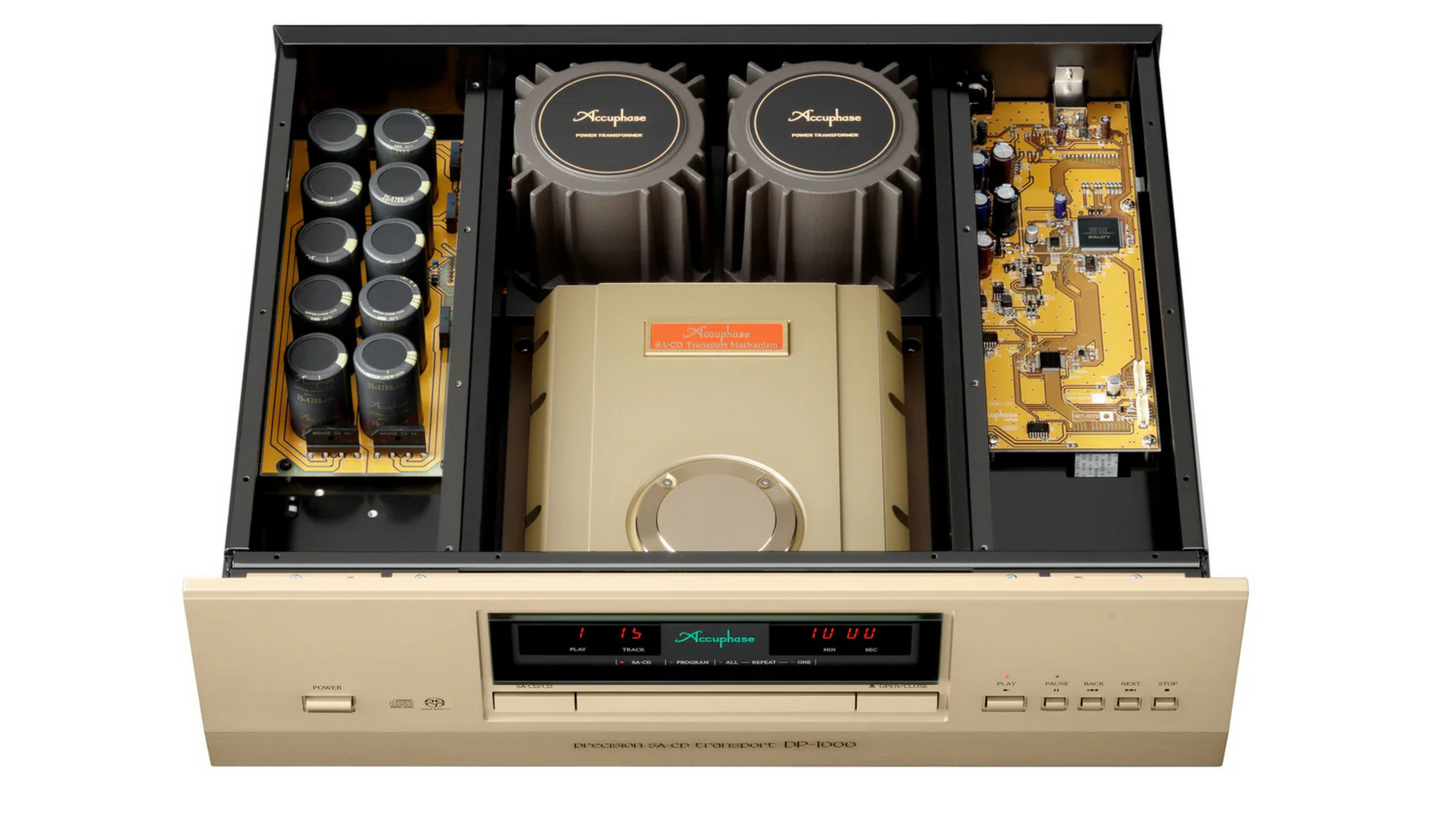
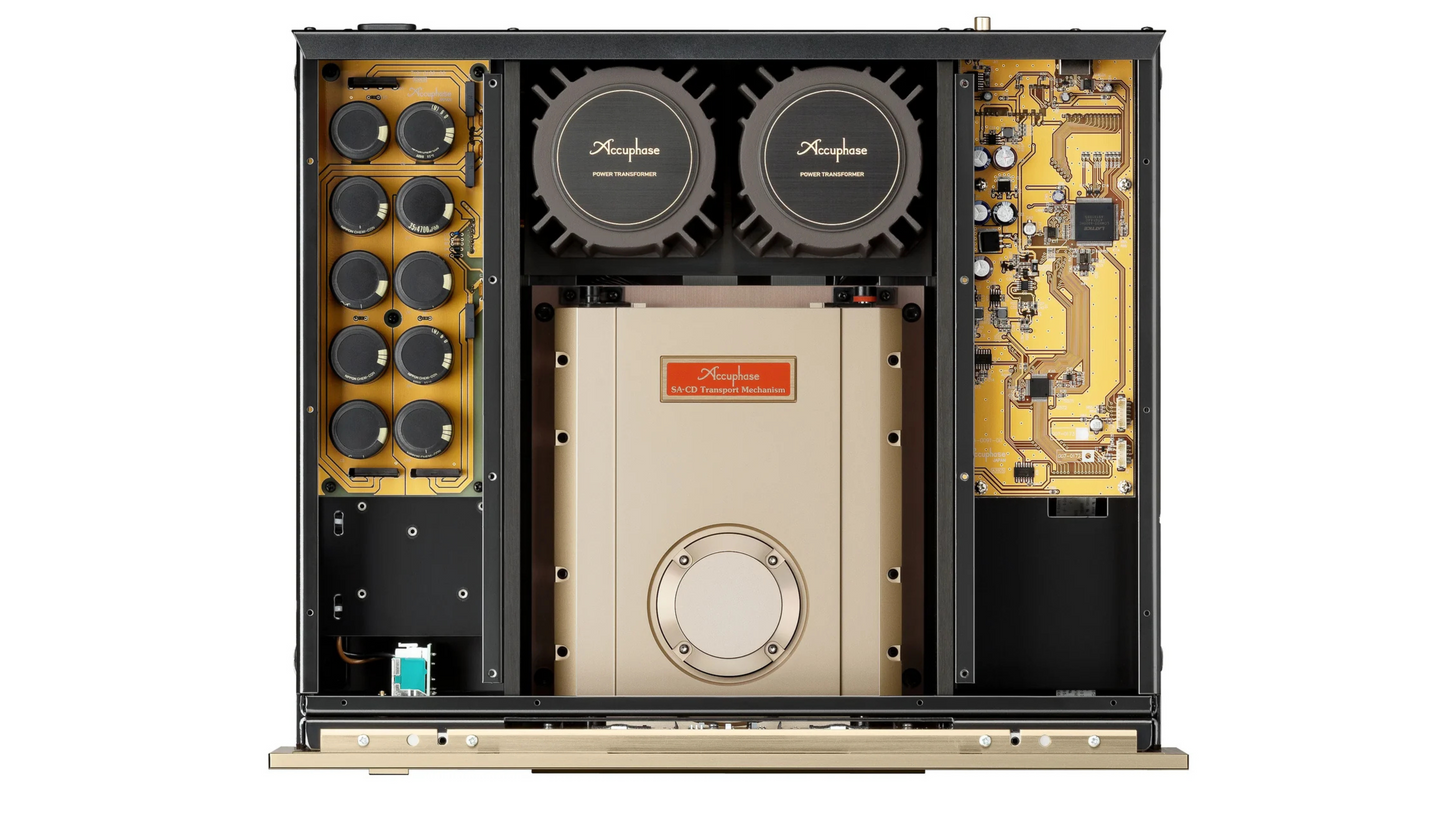
The DP-1000 provides separate toroidal transformers for the mechanical system and the digital signal processing circuits. This separation exists because the two systems have fundamentally different power requirements and noise characteristics. The motor drive electronics generate switching transients and back-EMF when the motor changes speed or direction. If the motor drive shares a power supply with the digital signal processing circuits, those transients couple into the signal path and degrade the quality of the digital data output. Separate transformers with separate filtering capacitors prevent this coupling at the source. The result is a digital output signal that reflects only the data on the disc, not the electrical environment of the mechanism reading it.
Ten large power supply filtering capacitors distribute across both supply channels, providing the energy storage needed to sustain clean power delivery during the brief but intense current demands of motor startup and speed adjustment. The physical layout of the DP-1000 reflects this architecture: the drive assembly occupies the center of the chassis, the mechanical transformer is to one side, the signal processing transformer and digital circuits are to the other, and the filtering capacitors are positioned accordingly. The weight is balanced across this layout intentionally.
HS-LINK — Accuphase's Proprietary Digital Interface
HS-LINK is Accuphase's proprietary digital transmission standard, and its presence on the DP-1000 is what makes SA-CD playback at full resolution possible. Standard coaxial S/PDIF — the digital output format used by virtually all CD transports and players — carries a maximum of 192 kHz PCM at 24-bit. It cannot carry DSD, the native format of SA-CD. The Super Audio CD layer contains DSD data at 2.8 MHz (single-speed DSD), and there is no standard digital interface that can carry this across component boundaries — only proprietary connections like HS-LINK, Sony's i.Link, or HDMI in limited implementations.
HS-LINK solves this with a dedicated high-speed serial interface carried over a proprietary cable. HS-LINK Ver. 1, which the DP-1000 supports, transmits DSD at 2.8 MHz and PCM up to 192 kHz at 24-bit. HS-LINK Ver. 2 extends this to DSD at 5.6 MHz and PCM up to 384 kHz at 32-bit. The DP-1000 supports both versions, with switching available from the front panel. The supplied AHDL-15 HS-LINK cable (1.5 m) connects the DP-1000 directly to the DC-1000 processor, forming a closed digital loop between the two components that carries the SA-CD layer intact with no conversion, no compression, and no data loss.
The coaxial output (IEC 60958 / AES-3 compliant, 75-ohm) remains available for connecting to any external DAC that accepts standard digital input, though that connection is limited to the CD layer and standard PCM resolutions.
Data Disc Playback and Programmable Playlists
Beyond SA-CD and standard CD, the DP-1000 reads data discs: CD-R, CD-RW, DVD-R, DVD-RW, DVD+R, and DVD+RW containing audio files in WAV, FLAC, DSF, and DSDIFF formats. This extends the DP-1000's utility to the large libraries of high-resolution downloads and ripped collections that serious digital listeners have accumulated, playable from burned discs without a computer in the chain. DSD files in DSF and DSDIFF format are supported natively — burned to a disc and played through the HS-LINK to the DC-1000, DSD downloads are reproduced at full resolution.
The programmable playlist function allows track order to be customized across a disc — useful for programming listening sessions from compilations or for playback from data discs where the file order on the disc does not match the desired listening sequence. Power-on play, which starts playback automatically when a compatible Accuphase timer is triggered, allows the DP-1000 to begin playing at a scheduled time without manual intervention.
The Accuphase Voicing Equalizer Interface
The DP-1000 includes a digital interface for the Accuphase DG-68 Voicing Equalizer, which allows the digital signal to be processed by the DG-68's room correction and tonal adjustment capabilities before being passed to the DC-1000 or another processor. This is a system-level feature for listeners who integrate the DP-1000 into a complete Accuphase system with digital room correction — it does not affect standalone operation.
The Chassis — Natural Wood, Cast Iron, and Machined Aluminum
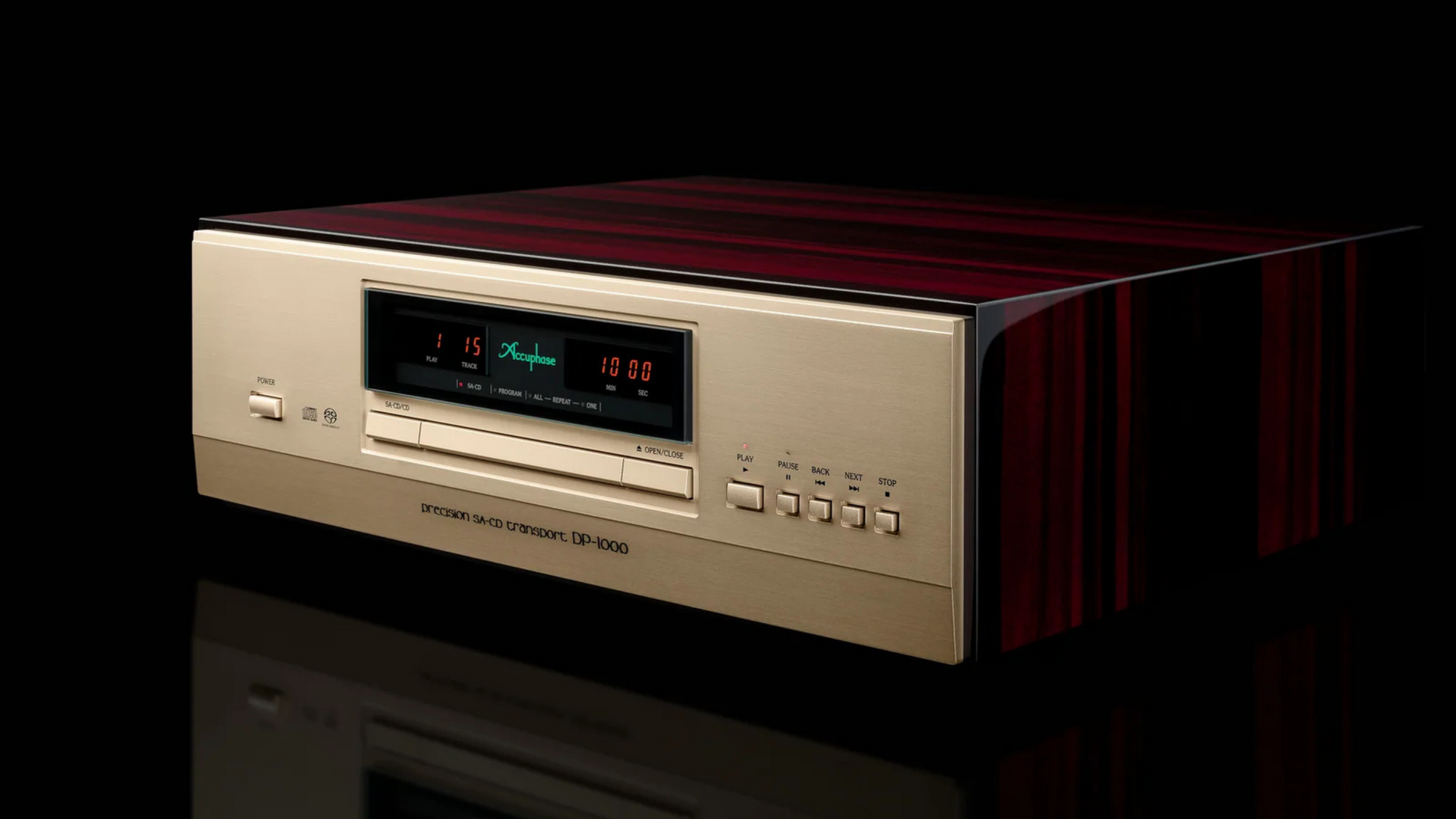
The DP-1000's chassis makes no compromises in fit or finish. The side panels are a natural grain wood case with a mirror finish, crafted from carefully selected virgin wood by artisans — the same specification used for Accuphase's reference preamplifiers. The top plate is hairline-finished aluminum. The insulator feet are advanced high-carbon cast iron, the same custom components used throughout Accuphase's reference product line for their vibration damping properties. The chassis weighs 29.8 kg — nearly 66 pounds — a consequence of the 11 kg drive and bottom plate assembly, the dual transformers, and the all-aluminum machined construction.
How the DP-1000 Compares: DP-770, Other SA-CD Sources, and the DP-1000/DC-1000 System
The DP-770 is Accuphase's integrated SA-CD player — a complete source component with both transport and DAC in a single chassis using the MDS+ conversion principle. It is an excellent component at its level and the right choice for a listener who wants a single-box disc source without the complexity of a two-chassis system. The DP-1000 addresses a fundamentally different design brief: it does not include a DAC, and its entire engineering budget is directed at the mechanical reading problem. The DP-770's transport mechanism is a capable design; the DP-1000's drive assembly is more than twice the weight and uses structural and damping techniques that a space-sharing chassis cannot accommodate.
Against other SA-CD transports at this level — the Esoteric VRDS-Neo mechanism used in the P-01XD, dCS's top-loading mechanism in the Vivaldi Transport — the DP-1000 is distinguished by the outer rotor brushless motor, the dual-hardness damper system, the separated power supplies, and the HS-LINK interface. It is one of a small number of current production transports that takes the mechanical reading problem as seriously as the electrical one.
Key Specifications — DP-1000 Transport
- Compatible Formats: 2-channel SA-CD; CD; Data discs (CD-R/RW, DVD-R/RW/+R/+RW): WAV, FLAC, DSF, DSDIFF
- Data Read Principle: Non-contact optical pickup
- Laser Wavelength: 655 nm (SA-CD); 790 nm (CD)
- Digital Output — HS-LINK: Accuphase proprietary standard; Ver. 1 (DSD 2.8 MHz; PCM up to 192 kHz/24-bit) and Ver. 2 (DSD up to 5.6 MHz; PCM up to 384 kHz/32-bit); switching selectable from front panel; supplied with AHDL-15 cable (1.5 m)
- Digital Output — Coaxial: IEC 60958 AES-3 compliant, 75-ohm; PCM only (SA-CD layer not available via coaxial)
- Drive Assembly Mass: 7.2 kg (15.9 lbs)
- Bottom Plate: 12 mm thick machined aluminum; 3.8 kg (8.4 lbs)
- Motor: Outer rotor brushless DC; no mechanical contacts
- Damper System: Dual-hardness elastic dampers (traverse and objective lens)
- Power Supply: Two separate toroidal transformers — one for mechanical system, one for signal processing; 10 large filter capacitors
- Playlist: Programmable; track order customizable
- Power-on Play: Supported (requires compatible Accuphase timer, sold separately)
- Voicing Equalizer Interface: Yes (digital connection for DG-68)
- Remote Control: RC-140 (supplied); includes amplifier operation
- Chassis: Natural grain wood side panels, mirror finish, virgin wood; hairline aluminum top plate
- Insulators: Advanced high-carbon cast iron
- Power Consumption: 16 W
- Dimensions (W × H × D): 477 × 156 × 394 mm (18.8″ × 6.1″ × 15.5″)
- Weight: 29.8 kg (65.7 lbs)
- Country of Origin: Japan
- Supplied Accessories: AC power cord; HS-LINK cable AHDL-15 (1.5 m); Remote Commander RC-140; cleaning cloth
- Warranty: Contact All Elite Audio for current warranty terms
Why Buy From All Elite Audio
All Elite Audio is an authorized Accuphase dealer. Every DP-1000 we sell is sourced through legitimate North American distribution with full manufacturer warranty coverage. Accuphase does not honor warranty claims on gray-market imports. We carry the complete Accuphase digital source line, including the DC-1000 companion processor, and can demonstrate the DP-1000/DC-1000 system in our showroom with the amplification and speakers appropriate to a reference-level audition. If you are building a serious disc playback system around Accuphase separates, we are glad to take the time that conversation requires.
Call 443-402-5055 / Text 443-402-5064 / Visit 1921 York Rd, Timonium, MD 21093
Frequently Asked Questions
The DP-1000 has no analog outputs — does it need a separate DAC to produce sound?
Yes, absolutely. The DP-1000 is a transport only: it reads data from SA-CD and CD and outputs that data as a digital signal. It produces no analog audio output on its own. To hear sound, the digital output must be connected to an external processor or DAC — either the Accuphase DC-1000 via HS-LINK for full SA-CD resolution, or any compatible external DAC via the coaxial output for CD-layer playback. If you connect the DP-1000 to an amplifier without an intervening DAC, nothing will be heard. The DP-1000 is designed to be the first half of a two-chassis system, not a standalone source. If you want a complete, self-contained SA-CD/CD source in a single component, the Accuphase DP-770 integrated player is the correct choice. If you want a two-chassis reference system with the absolute best possible transport mechanism, the DP-1000 paired with the DC-1000 is the answer.
Why does SA-CD playback require HS-LINK instead of standard coaxial digital output?
SA-CD's audio layer uses DSD encoding — Direct Stream Digital — at 2.8 MHz, a format that the standard S/PDIF coaxial digital interface cannot carry. S/PDIF was designed for PCM audio up to 192 kHz, and DSD is fundamentally different in structure. Transmitting the SA-CD layer from a transport to an external processor therefore requires a proprietary high-speed interface. Accuphase's solution is HS-LINK, which carries DSD natively without conversion. When the DP-1000 is connected to the DC-1000 via the supplied HS-LINK cable, the SA-CD layer is transmitted intact at full DSD resolution — 2.8 MHz with HS-LINK Ver. 1, or 5.6 MHz with Ver. 2. Via the coaxial output, only the CD layer is available, and only in standard PCM up to 192 kHz. If you own a collection of SA-CDs and want to hear the DSD layer rather than the PCM compatibility layer, HS-LINK — and therefore the DC-1000 as companion processor — is required.
What is the difference between HS-LINK Ver. 1 and Ver. 2, and which should I use?
HS-LINK Ver. 1 transmits DSD at 2.8 MHz (single-speed DSD, the native resolution of SA-CD) and PCM up to 192 kHz at 24-bit. HS-LINK Ver. 2 extends both: DSD to 5.6 MHz (double-speed DSD) and PCM to 384 kHz at 32-bit. For SA-CD playback, Ver. 1 is sufficient — SA-CDs contain DSD at 2.8 MHz and Ver. 1 carries this exactly. Ver. 2 becomes relevant for high-resolution data files in DSF or DSDIFF format burned to disc, where 5.6 MHz DSD recordings or ultra-high-sample-rate PCM files may be present. The DP-1000 switches between versions from the front panel, and the DC-1000 supports both. Use Ver. 1 for standard SA-CD playback; use Ver. 2 if your data disc library includes double-speed DSD or high-rate PCM files above 192 kHz.
What data disc formats does the DP-1000 play and how does this work in practice?
The DP-1000 reads CD-R, CD-RW, DVD-R, DVD-RW, DVD+R, and DVD+RW discs containing audio files in WAV, FLAC, DSF (DSD), and DSDIFF (DSD) format. In practice, this means you can burn high-resolution downloads to disc and play them through the DP-1000's transport mechanism directly, without a computer or network streamer in the chain. A FLAC file at 96 kHz/24-bit, a DSD64 file in DSF format, or a DSD128 file in DSDIFF format burned to a DVD-R will play through the DP-1000 and pass to the DC-1000 via HS-LINK at full resolution. This is practically useful for listeners who have accumulated high-resolution downloads and prefer physical media in the signal chain, or who want to play their DSD library through reference-level hardware without relying on a computer transport.
Why does the DP-1000 use dual toroidal transformers instead of one large shared transformer?
The mechanical system — the motor, the disc loading mechanism, and the traverse drive — requires power that is inherently noisy: motor drive electronics generate switching transients and back-EMF that appear on the supply rail. The digital signal processing circuits that read data from the disc and format the HS-LINK output are extremely sensitive to power supply noise, because that noise can appear as jitter — timing variations in the digital output — or as data errors that affect the accuracy of the digital stream. Sharing a single transformer between both systems means mechanical switching noise from the motor drive has a direct path into the signal processing supply rail. Separate transformers eliminate this path at the source: each system draws from its own magnetically isolated supply with its own filtering, and the mechanical system's noise has no route into the signal processing circuits. The result is a cleaner digital output, particularly during the motor speed changes that occur at track boundaries and during disc startup.
Why does the drive assembly weigh 7.2 kilograms and what does this achieve?
The 7.2 kg drive assembly, mounted on a 3.8 kg bottom plate, establishes a high-mass, low-center-of-gravity platform for the laser and traverse mechanism. In a disc drive, the pickup must follow a spiral groove on a rotating disc with micron-level precision. Any vibration in the chassis — from the motor itself, from external acoustic energy, from floor vibration — disturbs this tracking and produces data errors or jitter. Mass attenuates vibration: a heavier platform is harder to move by external forces, and the energy required to displace it by a given amount is proportional to its mass. By using a drive assembly and bottom plate with a combined mass of 11 kg, the DP-1000 creates a stable platform that resists external disturbance far more effectively than a lightweight mechanism. The dual-hardness elastic dampers between the mechanism and the chassis then address the residual resonances that the mass alone does not suppress.
Can the DP-1000 be used without the DC-1000, and what DACs are compatible?
Yes. The DP-1000's coaxial S/PDIF output (IEC 60958 / AES-3 compliant, 75-ohm) is a standard digital output compatible with any DAC or processor that accepts this format. Via the coaxial output, the DP-1000 sends CD-layer audio and PCM from data discs — it cannot send the SA-CD DSD layer over coaxial, which is limited to HS-LINK. If you own a high-quality external DAC and primarily listen to CD or high-resolution PCM data discs, the DP-1000 works without the DC-1000. If SA-CD playback at full DSD resolution is important to you, the DC-1000 is the only compatible receiver for the HS-LINK output. Accuphase does not publish HS-LINK compatibility with third-party processors, and HS-LINK is proprietary — third-party compatibility is not guaranteed and should not be assumed.
How does the DP-1000 compare to the DP-770 integrated SA-CD player?
The DP-770 is a complete SA-CD/CD player with both transport and DAC in a single chassis, using Accuphase's MDS+ conversion technology. It is an excellent component and the right choice for a listener who wants a single-box disc source — the transport mechanism and DAC are well-matched and the DP-770 competes seriously at its level. The DP-1000 is a fundamentally different product: it contains no DAC, and its entire engineering budget is concentrated on the mechanical reading problem. The drive assembly in the DP-1000 weighs more than twice what the DP-770's integrated mechanism can accommodate within a space-sharing chassis. The dual-hardness damper system, the separate power supplies for mechanical and signal processing, and the outer rotor brushless motor are all design choices that a combined chassis compromises to some degree. For a listener who has already committed to disc playback as a primary source and wants the best possible transport mechanism, the DP-1000/DC-1000 system is the answer. For a listener who wants simplicity and excellent quality, the DP-770 is the right call.
What does the programmable playlist feature do and is it useful?
The programmable playlist allows you to specify the order in which tracks on a disc play back — you can program any sequence of tracks, skip tracks you do not want to hear, or repeat specific tracks, and the DP-1000 will follow that sequence automatically. This is useful for listening sessions where the track sequence on a disc does not match the order you prefer — rearranging a classical disc so movements play in a different order, for example, or creating a custom program from a compilation. For data disc playback, where files may be stored in alphabetical or transfer order rather than listening order, the playlist function is particularly practical. Programs are entered via the front panel controls or the supplied RC-140 remote. The Power-on play function, which starts playback automatically when a compatible Accuphase timer triggers the unit's power, works in conjunction with the playlist — useful for listeners who want music to begin playing at a scheduled time.
Where can I buy the Accuphase DP-1000?
The Accuphase DP-1000 is available at All Elite Audio, an authorized Accuphase dealer at 1921 York Rd, Timonium, MD 21093. We carry both the DP-1000 and the companion DC-1000 processor and can demonstrate the complete system in our showroom. Buying from an authorized dealer is the only way to ensure full manufacturer warranty coverage — Accuphase does not honor warranty claims on gray-market units imported outside official North American distribution. If you are considering the DP-1000 with or without the DC-1000, we are glad to discuss which configuration suits your system and budget. Call us at 443-402-5055, text us at 443-402-5064, or visit the showroom.