Accuphase
Have a trade-in item? Click here.
Specs
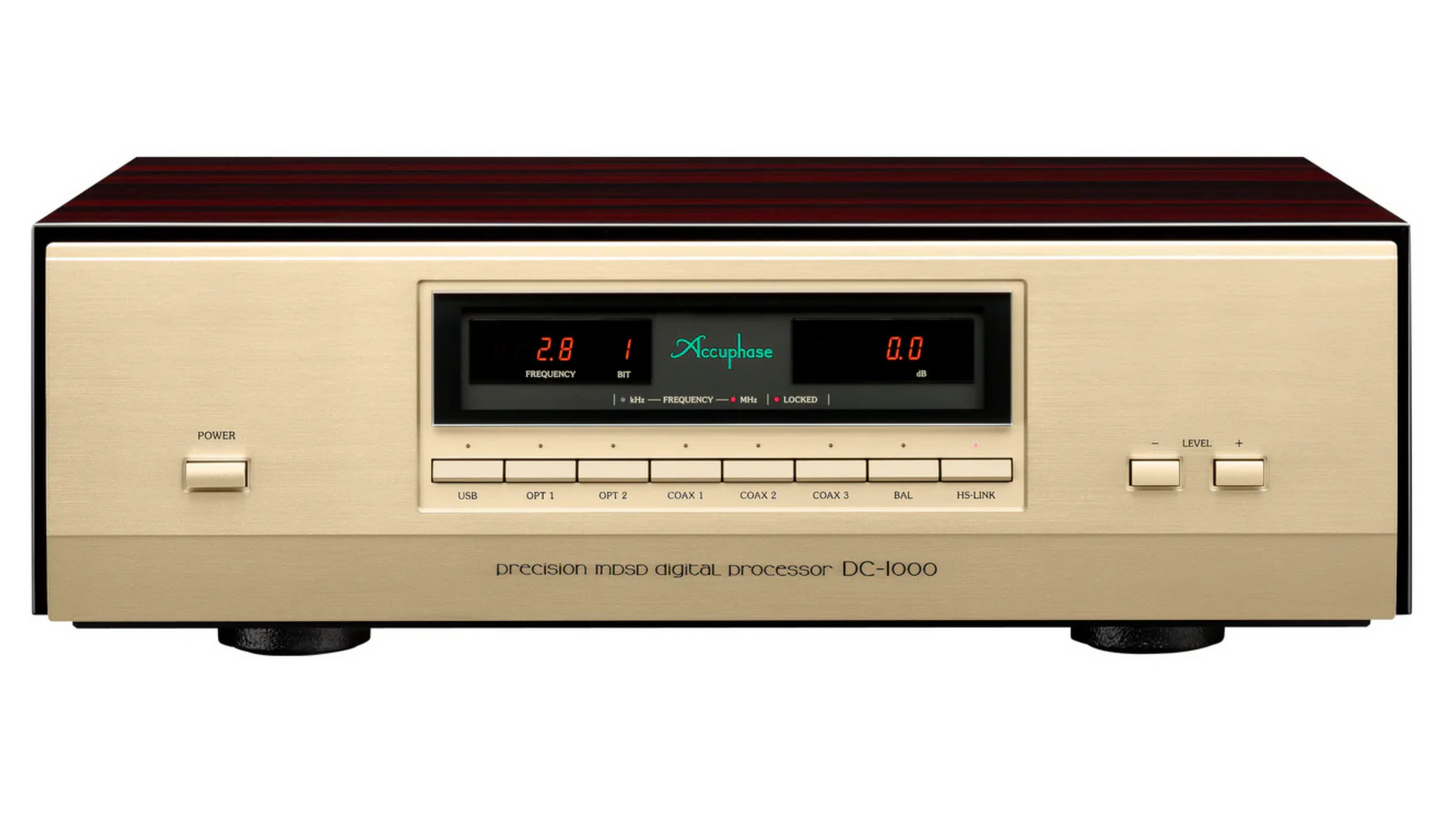
| Type | Precision MDSD digital processor (D/A converter) |
| Conversion method | MDSD (Multiple Double Speed DSD) with parallel converter operation |
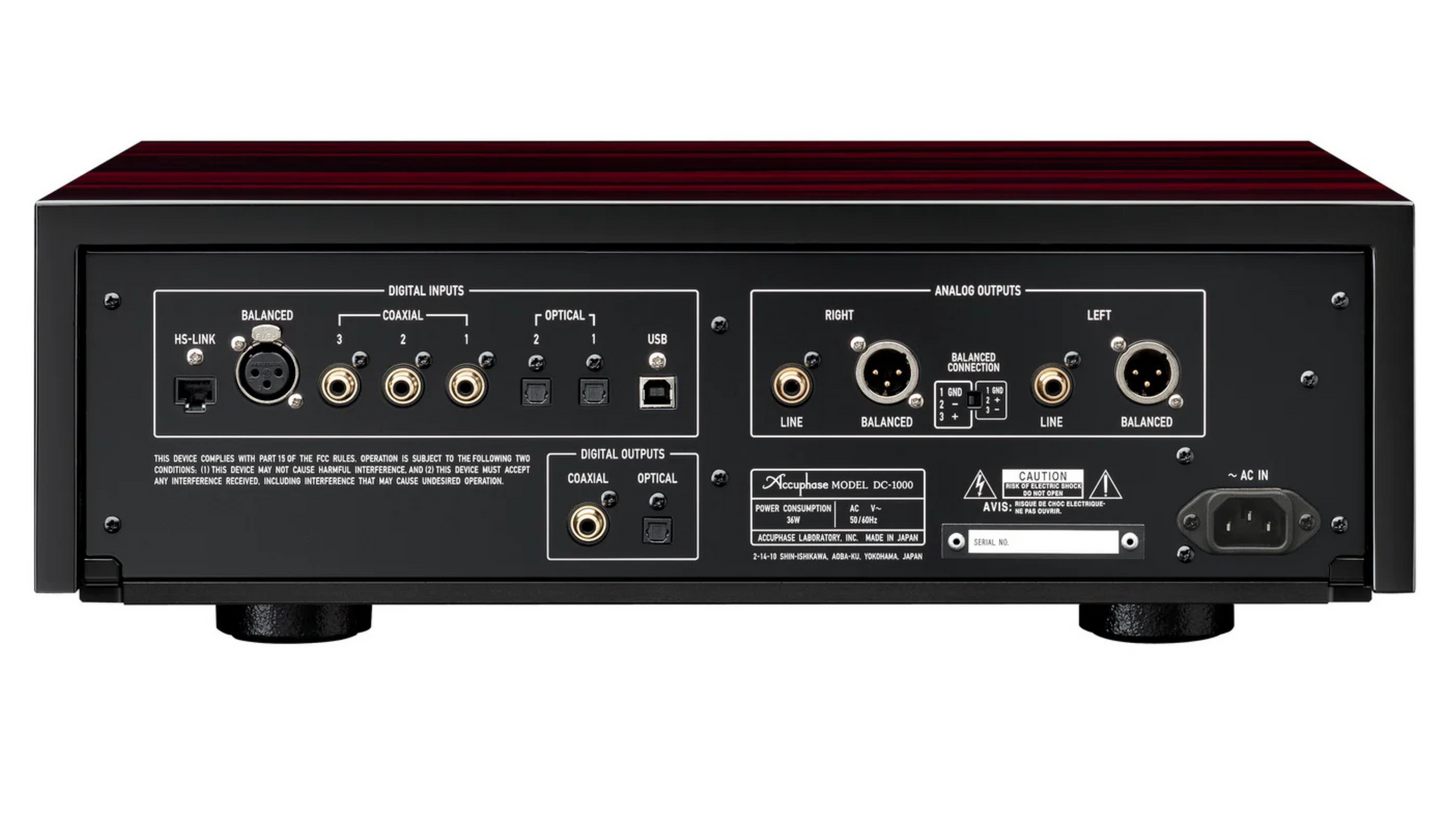
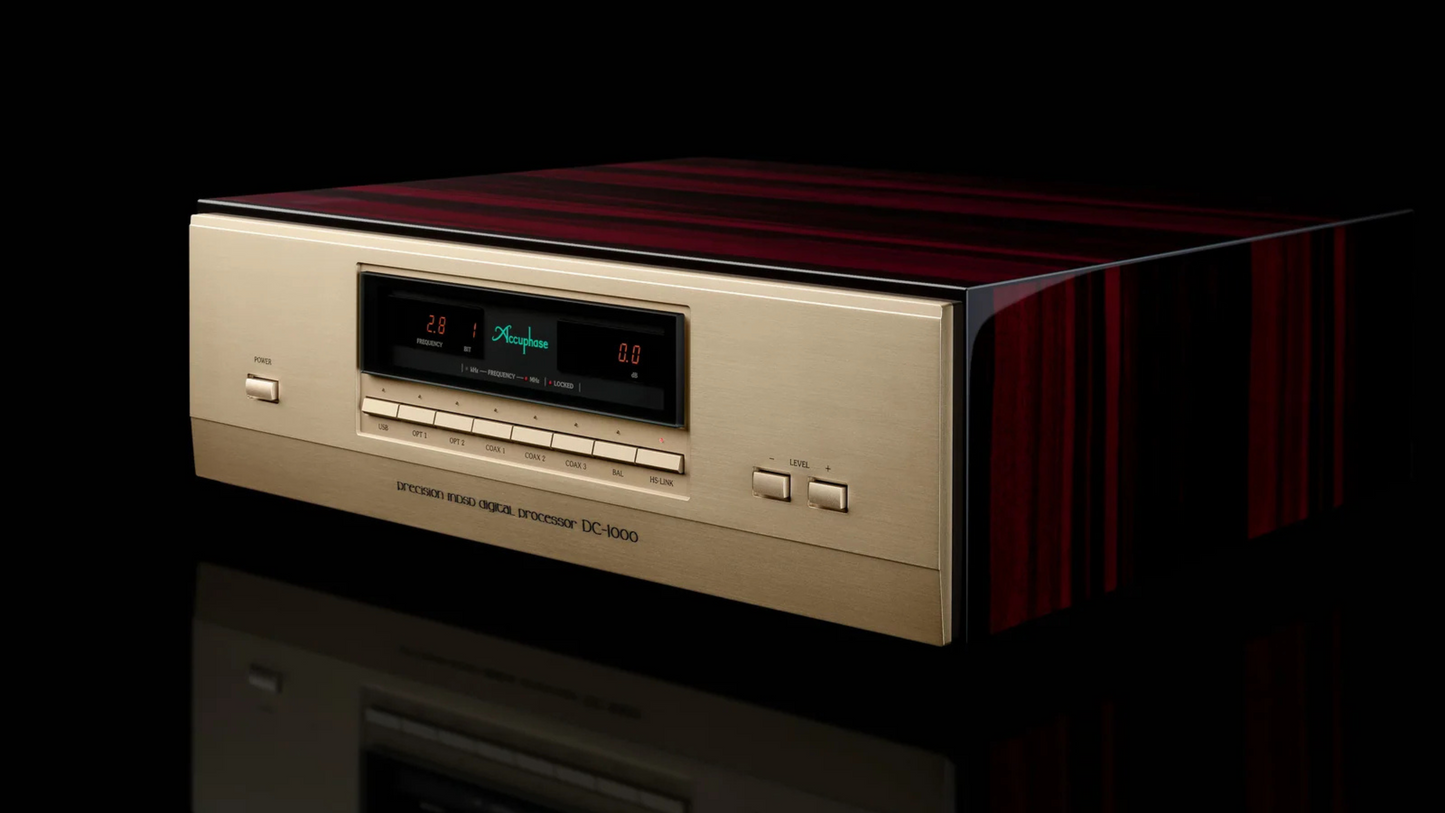
| Digital inputs | HS-LINK, USB, optical, coaxial, balanced (AES/EBU) |
| Analog outputs | Balanced (XLR) and unbalanced (RCA) |
| Frequency response | 0.5 Hz to 50 kHz |
| Dimensions (W x H x D) | 477 x 156 x 394 mm |
Warranty
Sold as an authorized Accuphase dealer by All Elite Audio. New Accuphase DC-1000 units include the full Accuphase USA manufacturer warranty of 3 years parts and labor for the original owner. Contact us with any service or setup questions.
What's in the Box
- Accuphase DC-1000 Precision MDSD Digital Processor
- AC power cord
- Remote control unit
- HS-LINK cable
- Owner's manual and warranty documentation
Overview
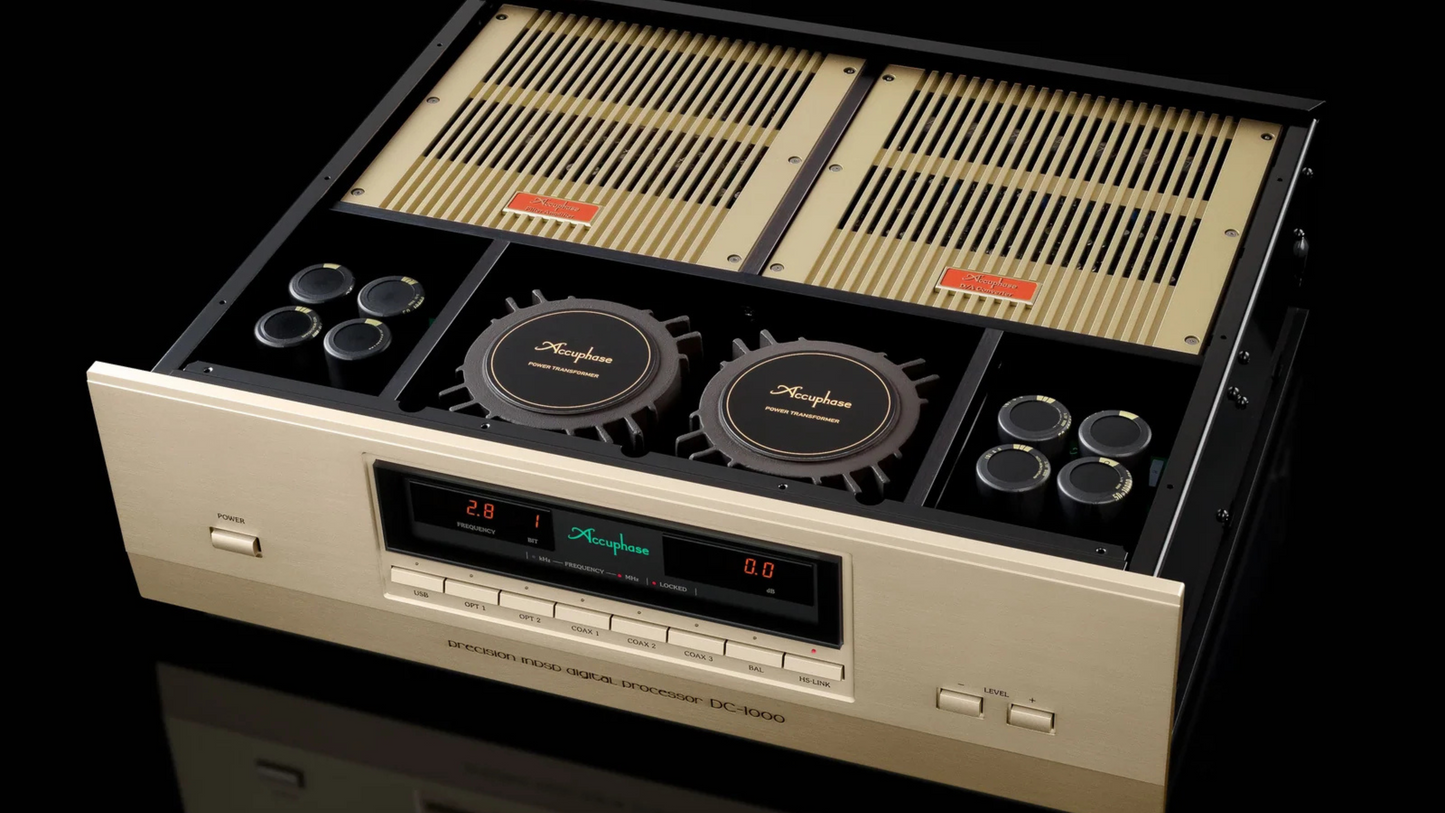
The Accuphase DC-1000 is a flagship Precision MDSD digital processor that represents the summit of Accuphase's digital-to-analog engineering. It employs the proprietary MDSD (Multiple Double Speed DSD) method, which processes DSD data directly through analog filtering rather than a conventional D/A chip, preserving the purity of the original signal. For PCM material, a large array of high-precision converters is operated in parallel to lower noise and raise resolution, delivering an exceptionally quiet and detailed presentation.
Built as a standalone processor, the DC-1000 is designed to partner with a dedicated transport such as the DP-1000, connected through Accuphase's HS-LINK interface for jitter-free clock and data transfer. It also accepts a wide range of external digital sources through its comprehensive input complement, making it the anchor of a true separates-based digital front end. Massive power supply resources, rigid chassis construction, and careful isolation of digital and analog domains reflect Accuphase's obsession with mechanical and electrical stability.
The DC-1000 is intended for the listener building a reference-grade system who wants the finest digital conversion Accuphase offers, with the flexibility to feed it from a matching transport or a networked source. It rewards careful system matching with a natural, dimensional, and effortlessly refined sound.
Key Features
- Flagship Precision MDSD (Multiple Double Speed DSD) conversion for direct DSD analog filtering
- Massive parallel converter array for PCM to lower noise floor and raise resolution
- HS-LINK interface for jitter-free connection to matching Accuphase transports
- Comprehensive digital input complement including USB, coaxial, and optical
- Fully balanced analog output stage with independent left and right circuitry
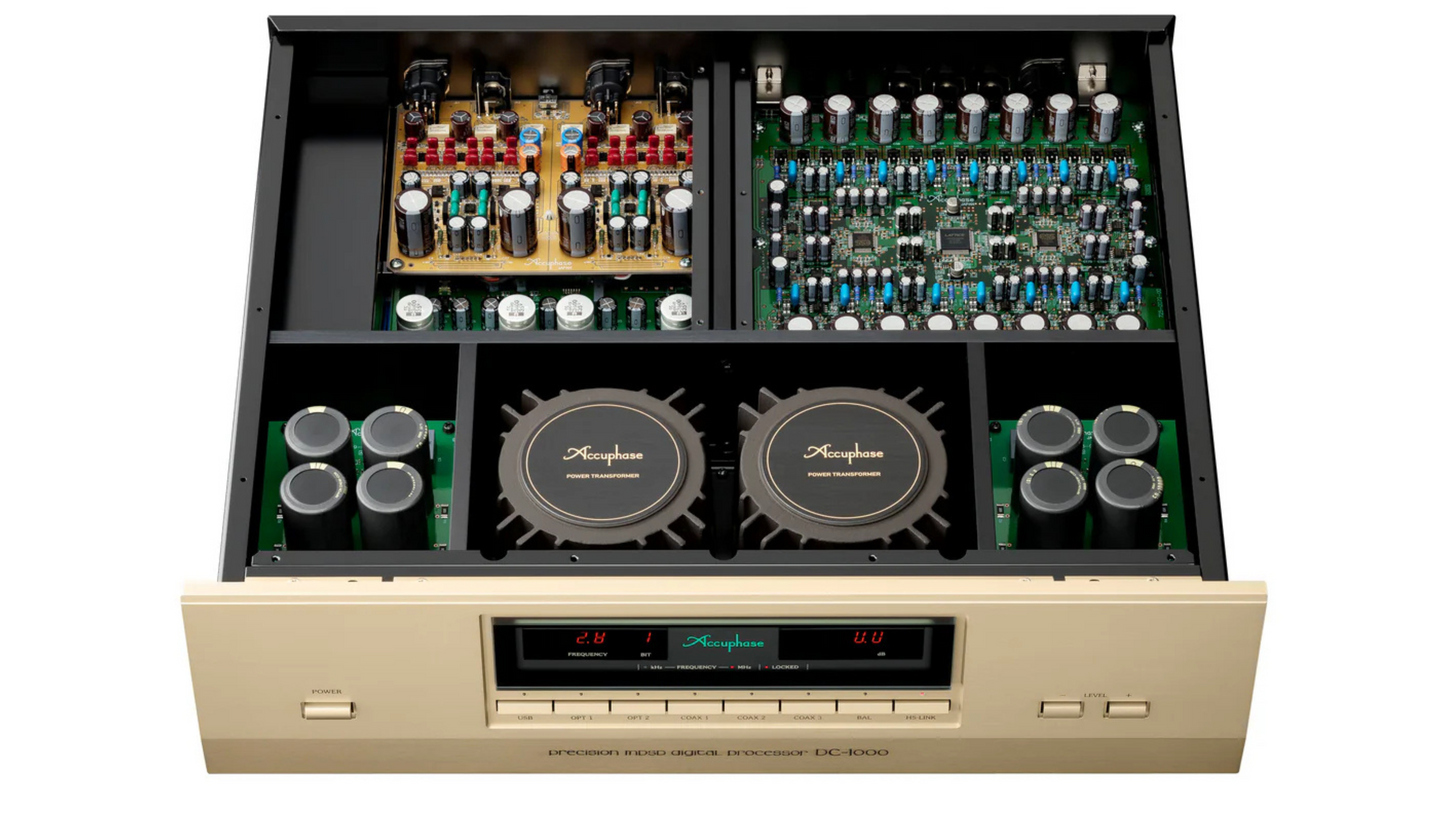
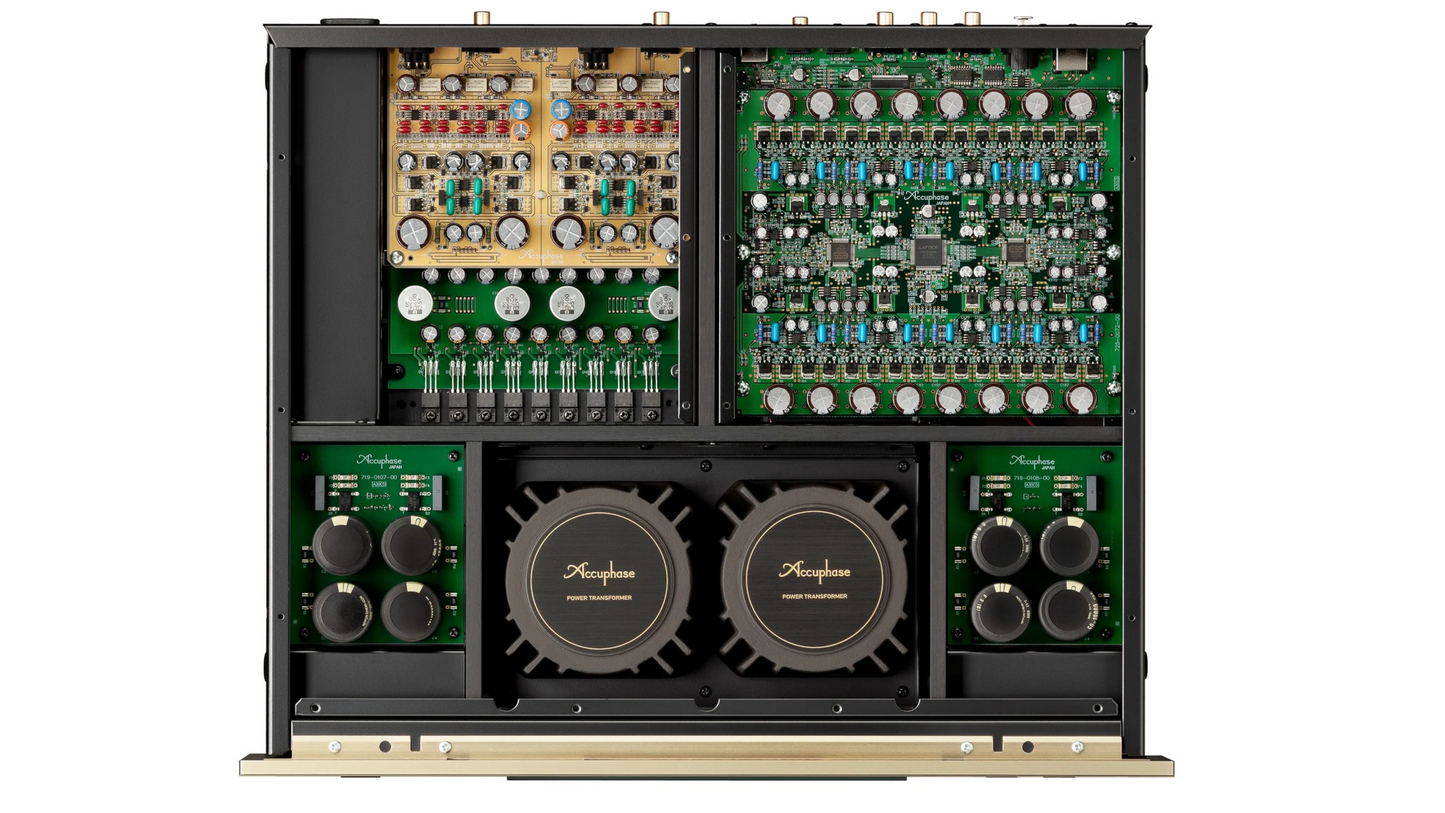
- Rigid, heavily damped chassis with isolated digital and analog sections
- High-capacity power supply with dedicated transformers for stable operation
- Selectable digital filters to tailor presentation to source and taste
- Designed as the anchor of a reference separates-based digital front end
How the DC-1000 Compares
Accuphase DC-1000 vs Accuphase DC-500
The DC-500 shares the MDSD conversion philosophy but sits one step below the DC-1000 in Accuphase's digital hierarchy. The DC-1000 extends the converter array and power supply resources to lower noise further and add resolution and dimensionality. Choose the DC-500 for a superb standalone processor at a more accessible tier, or the DC-1000 when you want the fullest expression of Accuphase digital conversion. See the Accuphase DC-500.
Accuphase DC-1000 vs Accuphase DG-78
The DG-78 is a digital voicing equalizer designed to analyze and correct room and system response in the digital domain. It serves a different purpose than the DC-1000, which is a pure reference D/A processor focused on conversion fidelity. Pair the DG-78 when acoustic correction is a priority, or the DC-1000 when uncolored, direct conversion is the goal. See the Accuphase DG-78.
Accuphase DC-1000 vs Accuphase DF-75
The DF-75 is a digital frequency dividing network built for active multi-amplified crossover systems, dividing the signal in the digital domain before conversion. The DC-1000 is a single stereo D/A processor for conventional passive setups. Choose the DF-75 for active crossover architectures, or the DC-1000 for reference two-channel D/A conversion. See the Accuphase DF-75.
Recommended Pairings
The DC-1000 reaches its full potential as part of a matched Accuphase digital front end paired with reference amplification. These components are selected for seamless interface and shared engineering character.
- Accuphase DP-1000 Transport The matching Precision SA-CD transport connects to the DC-1000 through HS-LINK for jitter-free clock and data transfer, forming the intended reference disc front end.
- Accuphase C-3900S Preamplifier This flagship stereo preamplifier pairs naturally with the DC-1000, providing a transparent, low-noise line stage worthy of the processor's resolution.
- Accuphase A-300 Monoblocks These Class-A monophonic power amplifiers deliver the effortless control and refinement to fully reveal what the DC-1000 resolves.
- Accuphase E-800S Integrated For a more compact reference system, the Class-A E-800S integrated offers preamp and power amplification in one chassis while honoring the DC-1000's character.
Frequently Asked Questions
What is the Accuphase DC-1000?
It is Accuphase's flagship Precision MDSD digital processor, a standalone reference D/A converter for high-end digital systems.
What does MDSD mean?
MDSD stands for Multiple Double Speed DSD, a method that processes DSD data directly through analog filtering rather than a conventional D/A chip, preserving signal purity.
Is the DC-1000 a standalone DAC?
Yes. It is a dedicated digital processor designed to be fed by an external transport or digital source rather than including a built-in disc mechanism.
What transport pairs best with the DC-1000?
The matching Accuphase DP-1000 Precision SA-CD Transport is the intended partner, connected through HS-LINK.
What is HS-LINK?
HS-LINK is Accuphase's proprietary digital interface that provides jitter-free clock and data transfer between transport and processor.
What digital inputs does the DC-1000 offer?
It provides a comprehensive complement including HS-LINK, USB, coaxial, and optical inputs.
Does the DC-1000 have balanced outputs?
Yes, it offers both balanced XLR and unbalanced RCA analog outputs.
Can I use the DC-1000 with a computer or network streamer?
Yes. Its USB and other digital inputs allow connection to a computer or a digital source component.
How does the DC-1000 differ from the DC-500?
The DC-1000 sits above the DC-500 with an extended converter array and greater power supply resources for lower noise and added resolution.
Does the DC-1000 support DSD playback?
Yes. Its MDSD architecture is designed specifically to handle DSD signals with direct analog filtering.
Does it have selectable digital filters?
Yes, it offers selectable digital filters to tailor the presentation to source and preference.
What amplification suits the DC-1000?
Reference Accuphase amplification such as the C-3900S preamplifier with A-300 monoblocks, or the E-800S integrated for a more compact system.
Is the DG-78 an alternative to the DC-1000?
They serve different roles. The DG-78 is a digital voicing equalizer for acoustic correction, while the DC-1000 is a pure reference D/A processor.
Can the DC-1000 be used in an active crossover system?
For active multi-amplified crossover setups, the DF-75 digital frequency dividing network is the appropriate tool. The DC-1000 is a stereo processor for conventional systems.
How is the chassis built?
It uses a rigid, heavily damped chassis with isolated digital and analog sections for mechanical and electrical stability.
What warranty does the DC-1000 include?
It carries a 3 year parts and labor warranty for the original owner when purchased from an authorized dealer.
Is All Elite Audio an authorized Accuphase dealer?
Yes. All Elite Audio is an authorized Accuphase dealer, so your DC-1000 includes full manufacturer warranty support.
Will the DC-1000 improve an existing Accuphase disc system?
Paired with a matching transport, it can serve as a reference D/A stage that elevates the resolution and refinement of your digital playback.
Who is the DC-1000 best suited for?
It is ideal for listeners building a reference-grade separates system who want the finest digital conversion Accuphase offers.
Why buy from All Elite Audio?
All Elite Audio is an authorized Accuphase dealer offering expert guidance, full manufacturer warranty support, and careful attention to system matching so your DC-1000 performs at its best.