Accuphase
Have a trade-in item? Click here.
Specs
| Frequency Response | 20 Hz to 20 kHz, +0 / -0.2 dB |
| Total Harmonic Distortion | 0.005% (balanced input, 20 Hz to 20 kHz) |
| Signal to Noise Ratio | 113 dB (high level input, rated output) |
| Input Sensitivity | 252 mV (balanced) for rated output |
| Input Impedance | 40 kilohms (balanced), 20 kilohms (line/unbalanced) |
| Rated Output Voltage | 2 V (maximum output 7 V) |
| Output Impedance | 50 ohms |
| Gain | 18 dB |
| Volume Control | Balanced AAVA type |
| Dimensions (W x H x D) | 477 x 156 x 412 mm |
| Weight | 24.4 kg |
| Power Consumption | 31 W |
Warranty
Sold as an authorized Accuphase dealer by All Elite Audio. New Accuphase C-2900 units include the full Accuphase USA manufacturer warranty of 3 years parts and labor for the original owner. Contact us with any service or setup questions.
What's in the Box
- Accuphase C-2900 stereo preamplifier
- AC power cord
- Remote control handset
- Owner's manual
- Warranty documentation
Overview
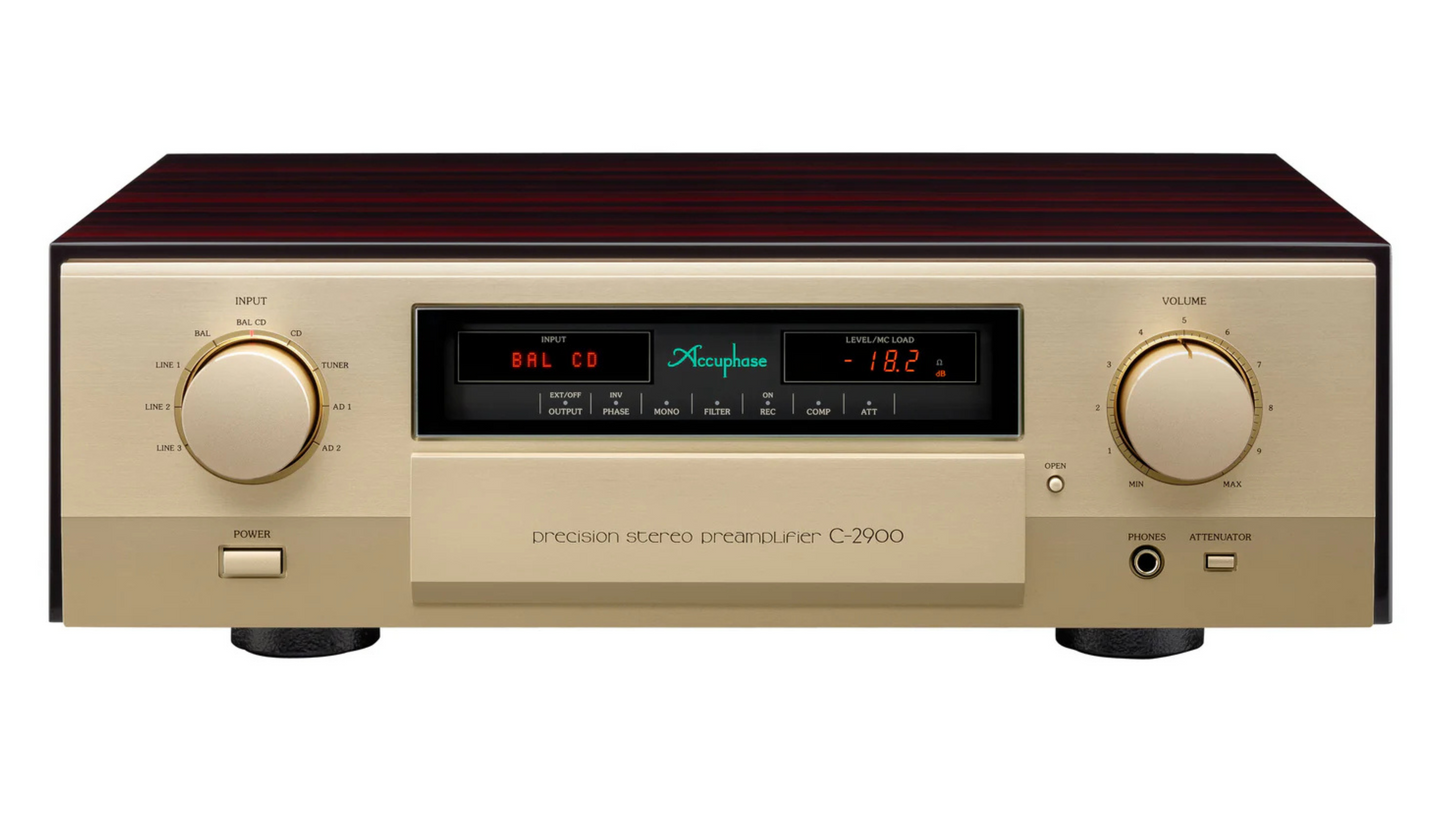
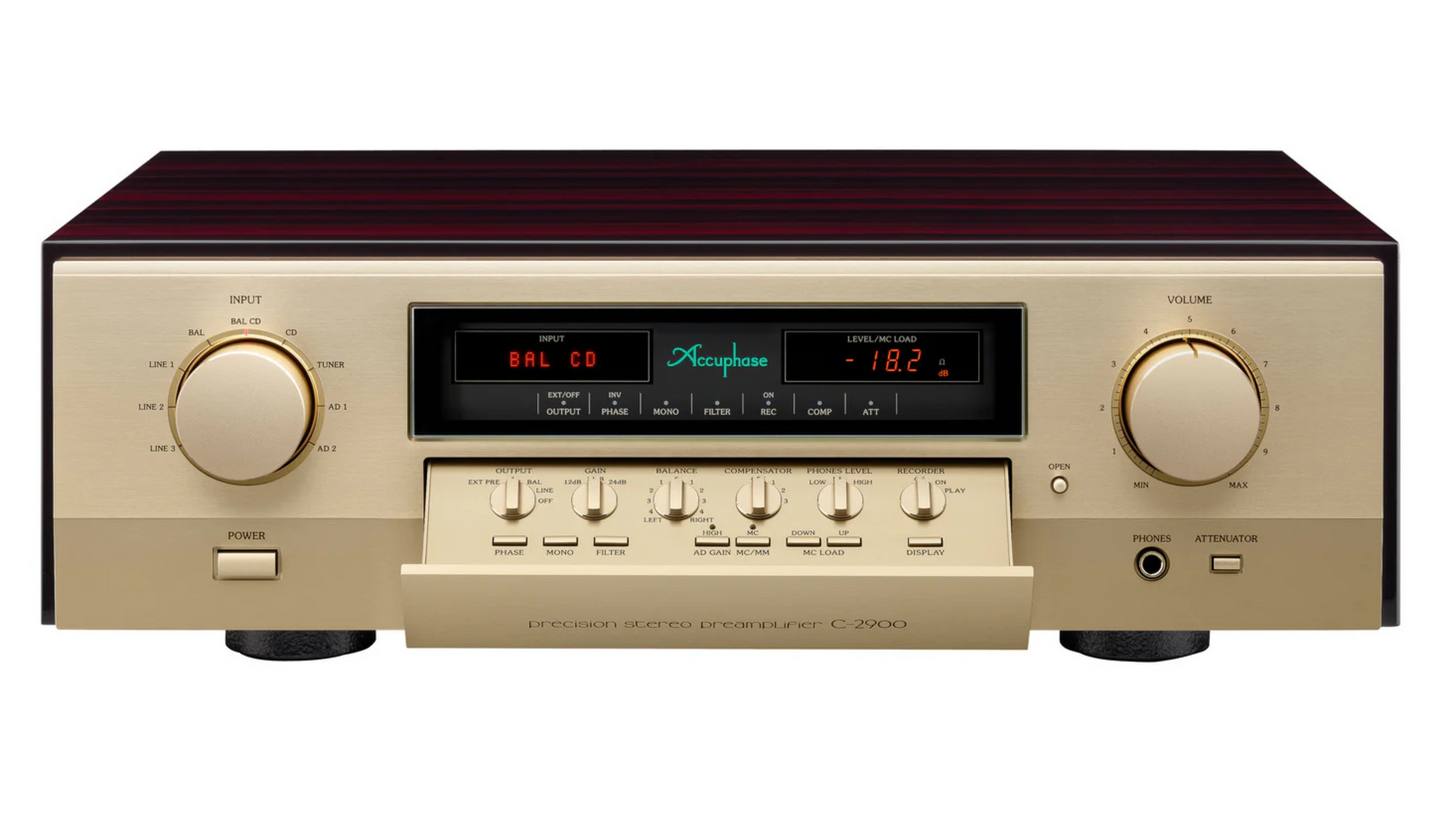
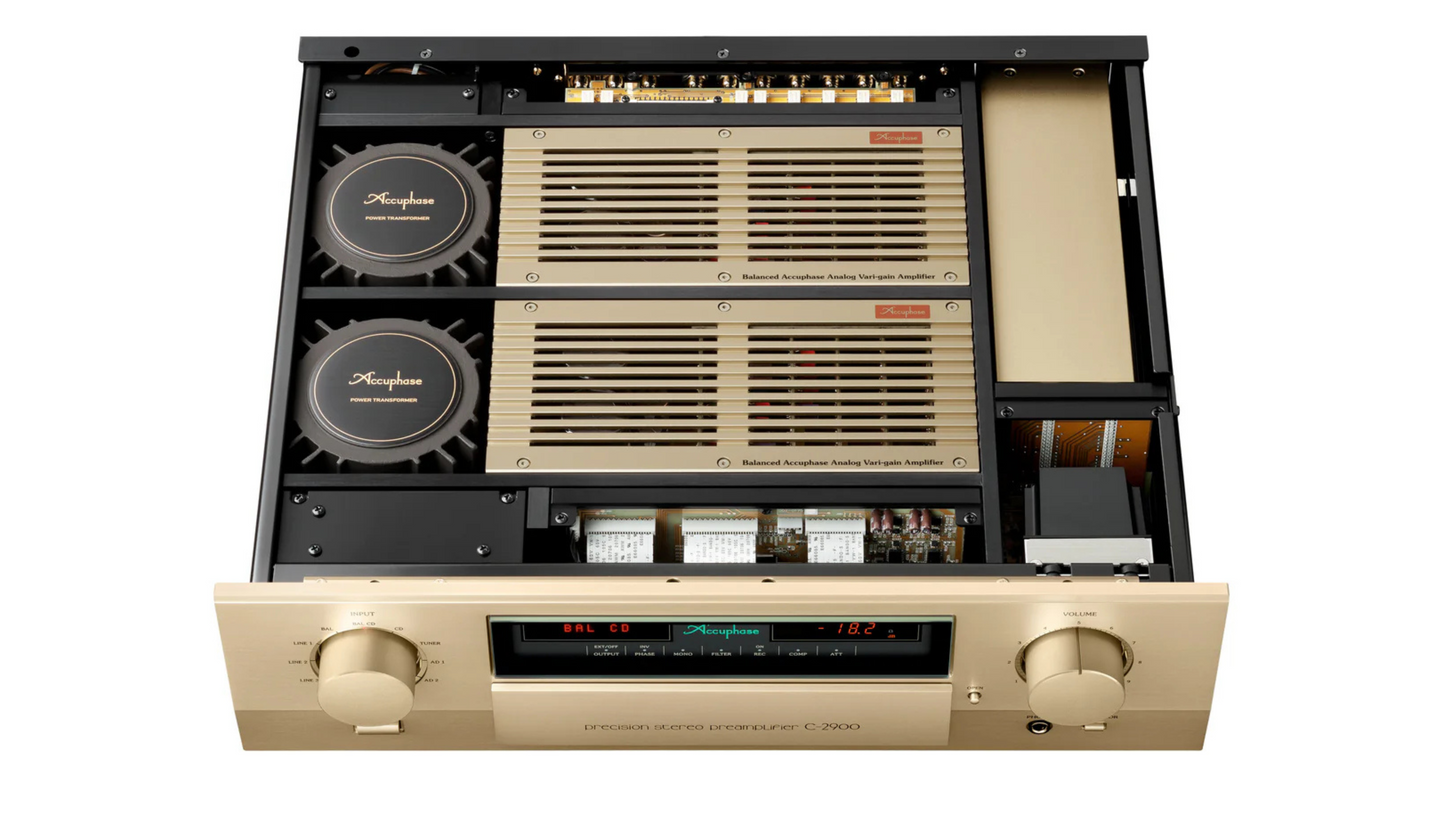
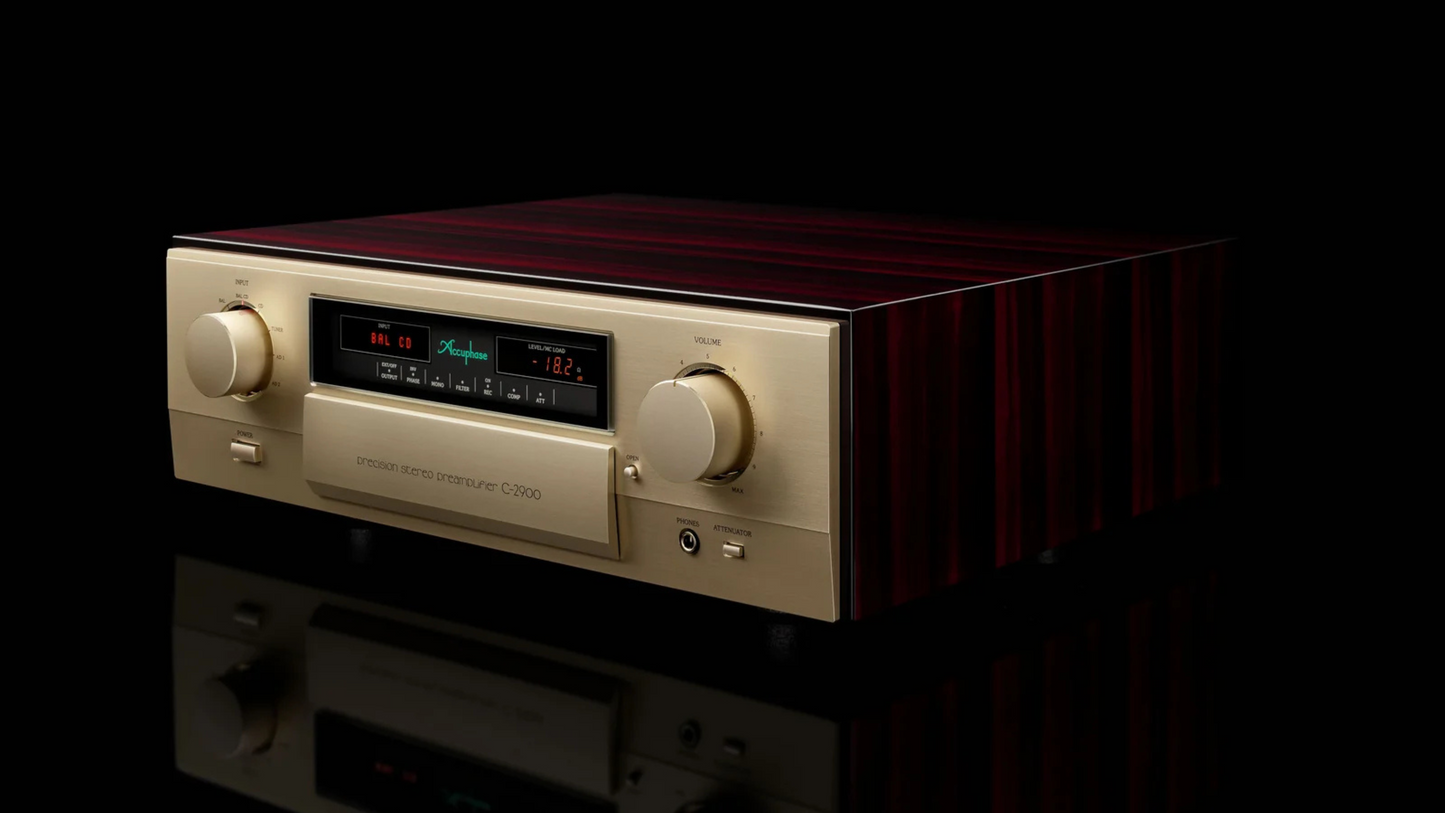
The Accuphase C-2900 is a precision stereo preamplifier that sits near the top of Accuphase's celebrated preamplifier lineup. It is built around the pursuit of vanishingly low noise and distortion, refined channel balance, and a signal path that preserves every nuance of the source. For listeners assembling a true reference system, it serves as the calm, transparent heart of the chain.
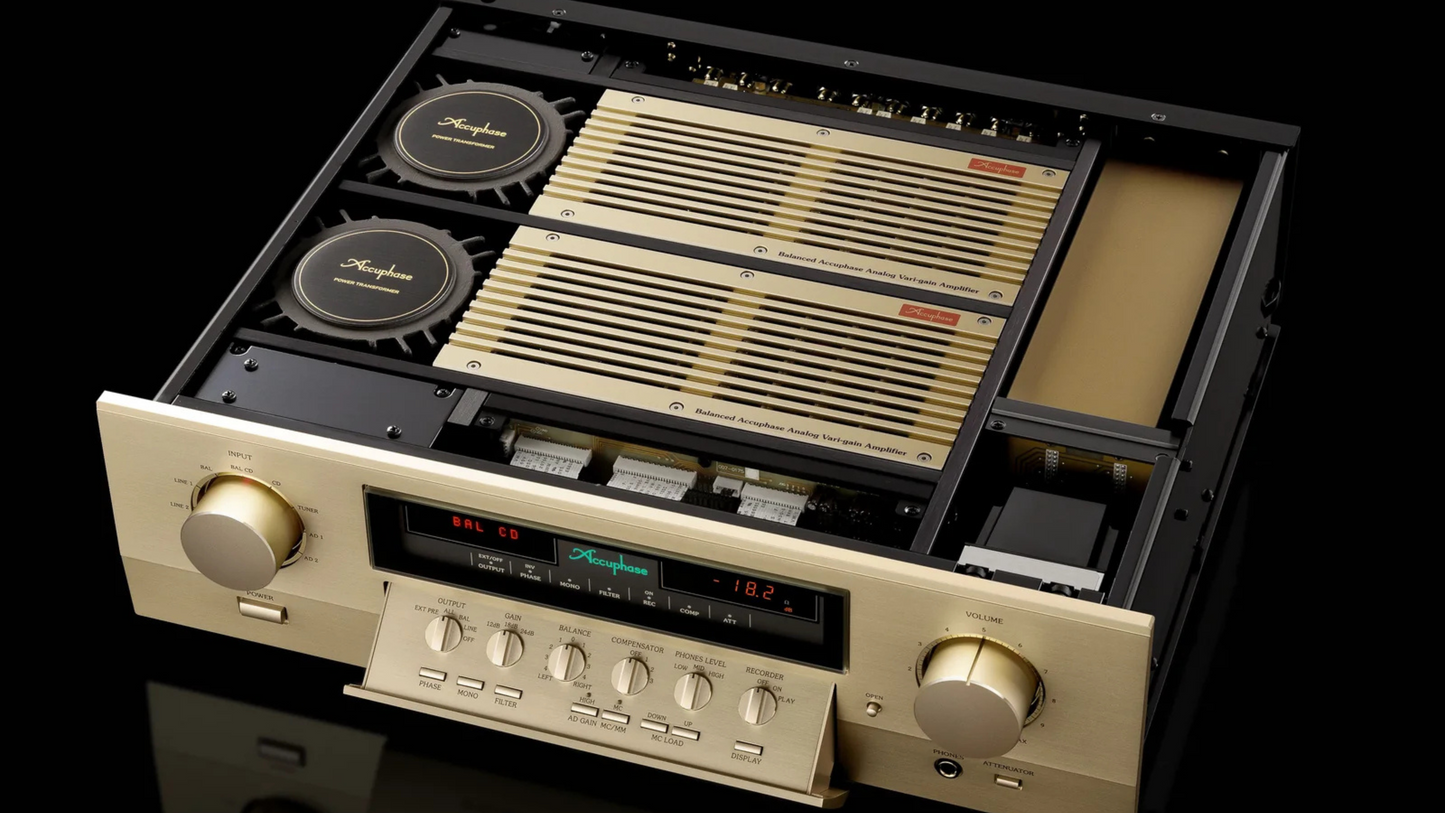
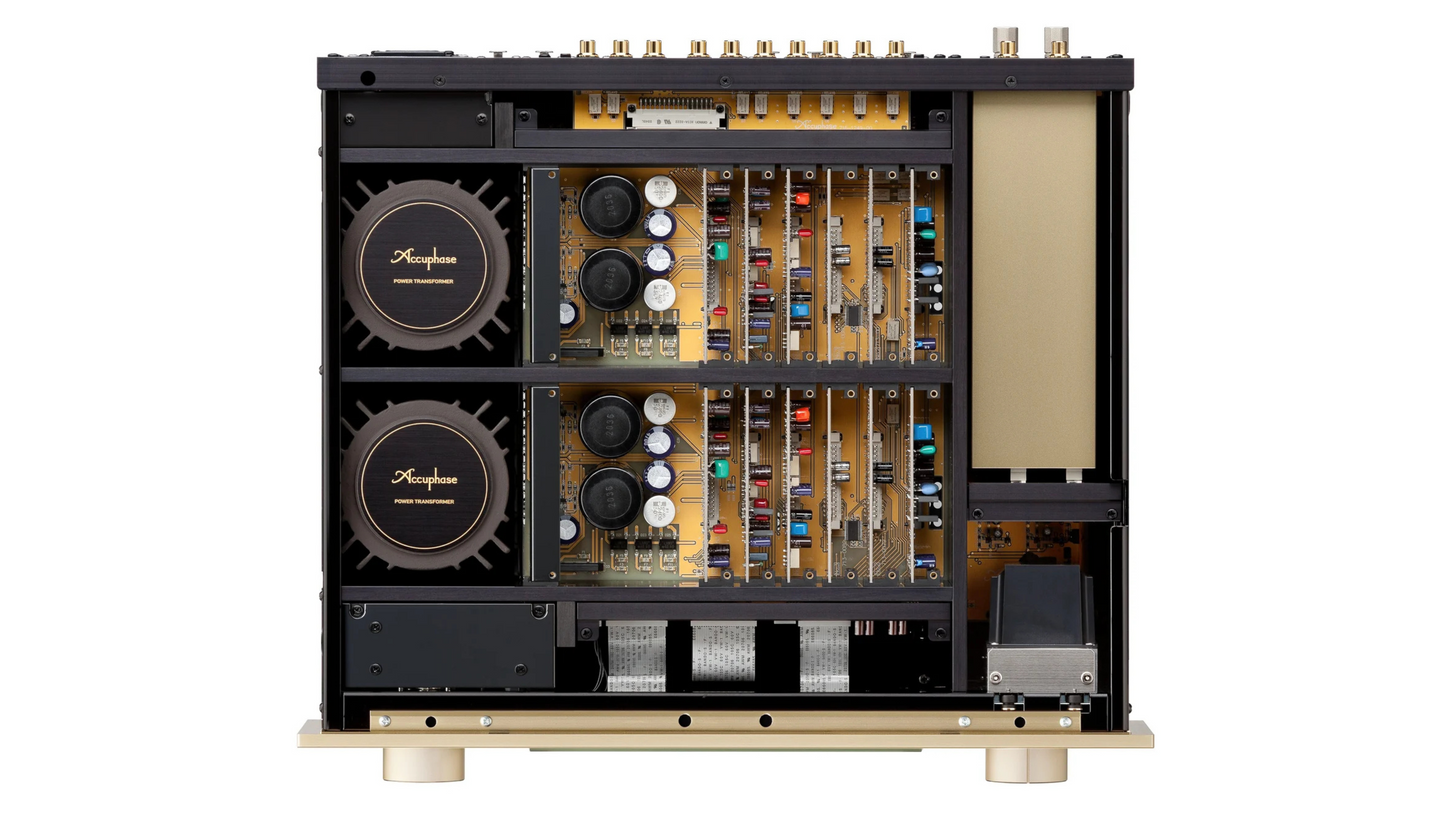
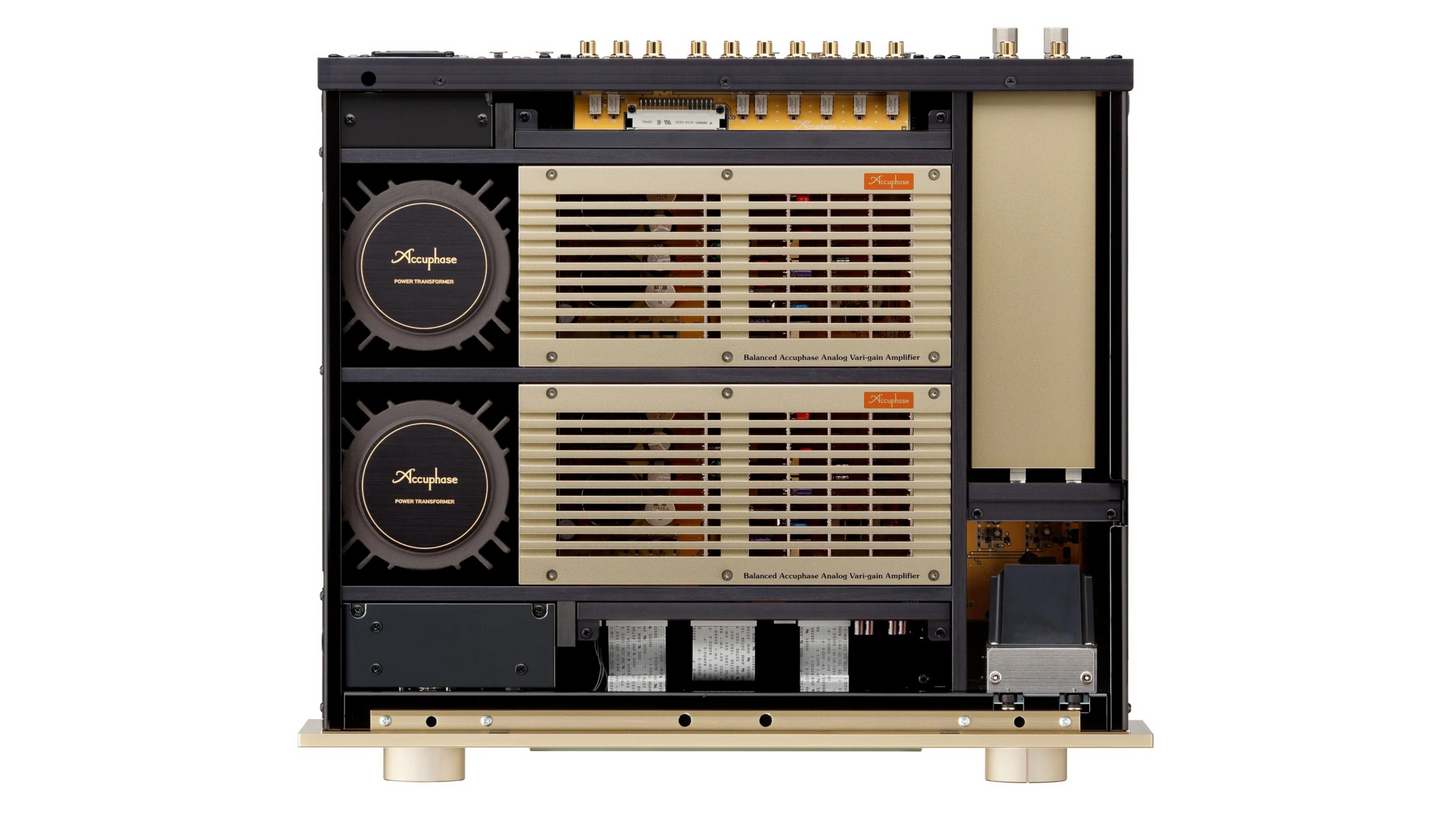
Central to the design is Accuphase's evolution of its Balanced AAVA volume control, which manages level in the current domain rather than with a conventional resistive potentiometer. By converting the music signal into a weighted set of current values and summing them, AAVA avoids the sonic penalties of a physical volume control and keeps signal-to-noise performance essentially constant regardless of listening level. Extensive parallel circuitry, heavy internal shielding, and a substantial power supply support this goal of pure, unfettered signal transfer.
The C-2900 is intended for the serious enthusiast who has invested in resolving loudspeakers and a high-current power amplifier and wants a control center that gets out of the way. It offers balanced and single-ended connectivity, an expansion slot for optional digital or phono boards, and the build quality and long-term reliability that have defined Accuphase for decades.
Key Features
- Balanced AAVA volume control operates in the current domain for constant signal-to-noise ratio at any level
- Fully balanced circuit topology from input to output for excellent common-mode noise rejection
- Multiple parallel amplification circuits lower noise and distortion
- Logic-controlled relay input switching keeps signal paths short and pristine
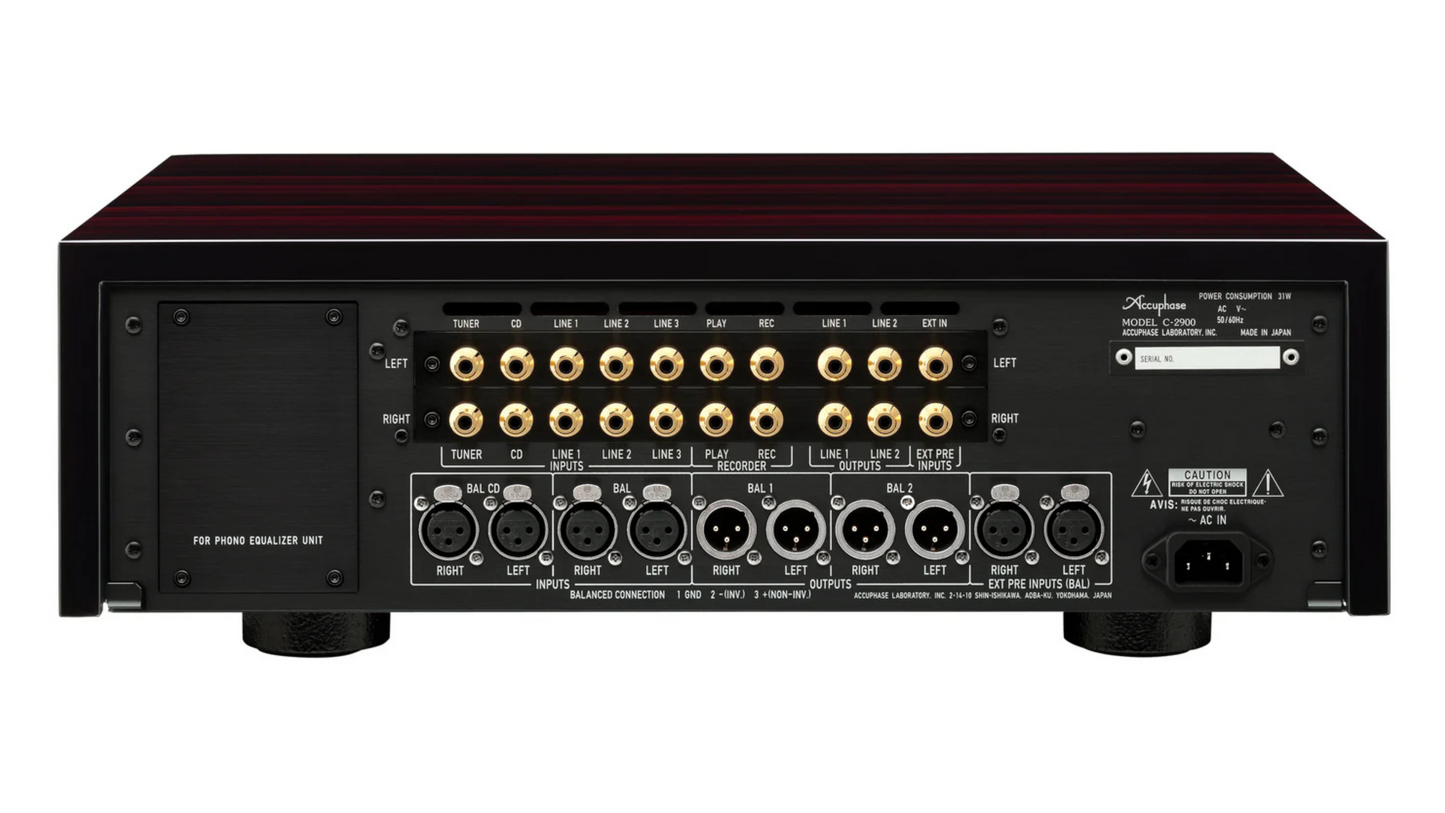
- Expansion slot accepts optional analog disc (phono) or digital input boards
- High-inertia toroidal power supply with large filter capacity for stable, dynamic delivery
- Balanced (XLR) and single-ended (RCA) inputs and outputs with phase selection
- Precision channel balance and gain control for exacting system matching
- Machined aluminum chassis and casework built for long-term reliability
How the C-2900 Compares
Accuphase C-2900 vs Accuphase C-3900S
The C-3900S is the flagship above the C-2900 and represents Accuphase's most ambitious control center. It multiplies the parallel AAVA circuitry and power supply resources for the lowest achievable noise floor and the most effortless resolution. Choose the C-3900S if you want the ultimate expression of the platform, while the C-2900 delivers the same design philosophy in a more attainable package. See the Accuphase C-3900S.
Accuphase C-2900 vs Accuphase C-2300
The C-2300 sits one step below the C-2900 and shares the family sound of quiet, natural transparency. The C-2900 extends the AAVA implementation and refines the power supply for a lower noise floor and greater sense of ease. Listeners who want a taste of the reference range will appreciate the C-2300, while the C-2900 rewards more resolving systems. See the Accuphase C-2300.
Accuphase C-2900 vs Luxman C-10X
The Luxman C-10X is another Japanese reference preamplifier and pursues its own character with the LECUA volume system and a warmer, slightly rounded presentation. The C-2900 leans toward pinpoint neutrality and vanishing background noise. Both are superb control centers, so the choice comes down to the tonal character and system synergy you prefer. See the Luxman C-10X.
Recommended Power Amplifiers
The C-2900 is designed to drive Accuphase power amplifiers, and the following pairings build a coherent reference system from control center to loudspeaker.
- Accuphase A-80 This pure Class-A stereo amplifier is an ideal high-end partner, matching the C-2900's transparency with rich, powerful, low-distortion output for demanding loudspeakers.
- Accuphase A-48S A more compact Class-A option that shares the same tonal purity, pairing beautifully with the C-2900 in medium sized rooms and with efficient speakers.
- Marten Parker Trio Diamond These refined floorstanders reveal the low noise floor and resolution of the C-2900, rewarding the system with airy, precise imaging.
- Gauder Akustik Capello 100 DV A resolving, dynamic floorstander that showcases the C-2900's transparency and works well with high-current Accuphase amplification.
Frequently Asked Questions
What is the Accuphase C-2900?
It is a precision stereo preamplifier, or control center, that sits near the top of Accuphase's preamplifier range and serves as the transparent heart of a high-end system.
What is AAVA volume control?
AAVA is Accuphase's proprietary volume system that adjusts level in the current domain by weighting and summing current values, rather than using a conventional resistive potentiometer. This keeps the signal-to-noise ratio essentially constant at any listening level.
Is the C-2900 fully balanced?
Yes, it uses a fully balanced circuit topology from input to output, which provides strong rejection of common-mode noise across balanced connections.
Does the C-2900 have a built-in phono stage?
The C-2900 features an expansion slot that accepts an optional analog disc (phono) board or a digital input board, allowing you to configure it to your sources.
What inputs and outputs does it offer?
It provides both balanced XLR and single-ended RCA inputs and outputs, with phase selection and logic controlled relay input switching.
Which power amplifiers pair best with the C-2900?
Accuphase power amplifiers are the natural partners. The A-80 and A-48S offer pure Class-A refinement, while the P-7500 delivers high-current headroom for demanding loudspeakers.
Can I use the C-2900 with non-Accuphase amplifiers?
Yes. Its balanced and single-ended outputs and modest output impedance make it compatible with a wide range of quality power amplifiers, though Accuphase amplifiers offer ideal synergy.
How does the C-2900 differ from the C-2300?
The C-2900 sits above the C-2300 in the range and extends the AAVA implementation and power supply resources for a lower noise floor and greater sense of ease on resolving systems.
How does the C-2900 differ from the C-3900S?
The C-3900S is the flagship and multiplies the parallel AAVA circuitry and power supply for the lowest achievable noise and the most effortless resolution. The C-2900 delivers the same philosophy in a more attainable form.
What is the frequency response of the C-2900?
It is rated at 20 Hz to 20 kHz within plus 0 and minus 0.2 dB, ensuring flat, uncolored response across the audible band.
How quiet is the C-2900?
It offers an excellent signal-to-noise ratio of around 116 dB at the high level input, which contributes to its exceptionally black background.
What are the dimensions and weight?
It measures approximately 465 x 154 x 427 mm and weighs about 24.4 kg, reflecting its substantial power supply and machined casework.
Does the C-2900 include a remote control?
Yes, a remote control handset is included for convenient operation of volume and input selection.
Can I adjust channel balance and gain?
Yes, the C-2900 offers precise channel balance and gain adjustment, which helps with exacting system matching and room setup.
What speakers work well with a C-2900 based system?
Resolving floorstanders such as the Marten Parker Trio Diamond or the Gauder Akustik Capello 100 DV reveal the preamplifier's low noise floor and precise imaging.
Is the C-2900 suitable for a reference two channel system?
Absolutely. It is designed as a reference control center for serious two channel listening with resolving loudspeakers and high-quality amplification.
How much power does the C-2900 consume?
It consumes about 37 watts, reflecting its role as a preamplifier with a well regulated power supply.
Does Accuphase support the C-2900 long term?
Accuphase is well known for durable construction and long-term parts support, and this preamplifier is built for many years of reliable service.
What warranty comes with the C-2900?
As an authorized dealer, All Elite Audio offers a 3 year parts and labor warranty to the original owner. Warranty details are provided separately from this listing.
Why buy from All Elite Audio?
All Elite Audio is an authorized Accuphase dealer based in Maryland, which means your C-2900 is genuine, fully warrantied, and supported by expert advice on system matching. We help you build a complete, coherent reference system with confidence.